termio
Health Gecti
- License — License: MIT
- Description — Repository has a description
- Active repo — Last push 0 days ago
- Community trust — 64 GitHub stars
Code Gecti
- Code scan — Scanned 12 files during light audit, no dangerous patterns found
Permissions Gecti
- Permissions — No dangerous permissions requested
Bu listing icin henuz AI raporu yok.
A terminal-first agentic development environment for macOS. Build for Claude Code, Codex, OpenCode and any TUI agent.

The Terminal-first Agentic Development Environment



English | 简体中文 | 繁體中文 | 日本語 | 한국어
Run Claude Code, Codex, and any CLI agent side by side in a native Mac app —
every session live in the sidebar, and a menu-bar dot that tells you who needs you.
Download for macOS • Website • Docs • Changelog • Discord
Install
Download Termio for macOS — free,
no account, macOS 14+. Or with Homebrew:
brew install --cask termio-sh/tap/termio
On iPhone: get the companion beta on
TestFlight, then pair it by
scanning the QR code in the Mac app's Settings ▸ Mobile.
Built for watching agents work
The IDE was built around a person typing code. When agents write most of the
code, the environment's job changes: it's where agents work and where you
direct, review, and unblock them. Termio is that environment — Terminal-first,
because that's where the agents already live — built for the new
shape of the work: several agents going at once, most of them fine without
you, one of them stuck. (The longer argument:
From IDE to ADE.)
- A real terminal, not a web view. Swift + AppKit on
libghostty (Ghostty's terminal core), rendered with
Metal. No Electron, no xterm.js. - Projects → sessions. The sidebar mirrors how you actually work: each
project holds its terminals and agents, with git worktrees nested beneath it
for parallel tasks. - Status with zero setup. Termio wires up each agent's own hooks and reads
the signals agents already emit. Working, idle, or needs you — per-session
dots, and a menu-bar tray that stays calm, pulses while agents work, and
rings when one is blocked on you. - Review without leaving. A read-only git pane (changes, history, unified
diffs), a file tree with a click-to-edit editor, and project-wide content
search — the terminal stays the place where you commit. - Free. No account, no license keys, no paid tier. MIT-licensed.
Features
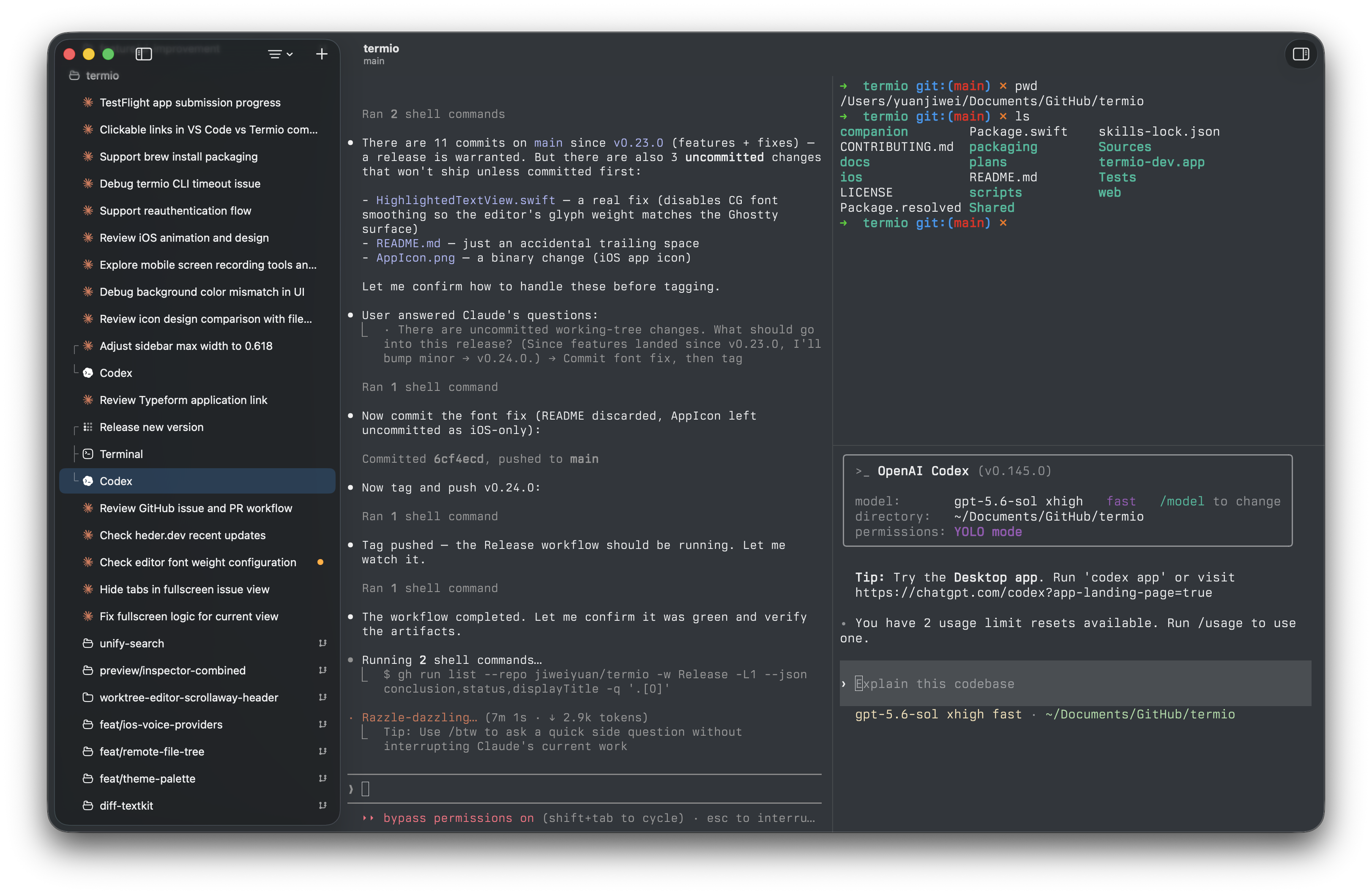
Sessions, side by sideEvery project keeps its own terminals and agent sessions. Switch instantly from |
|
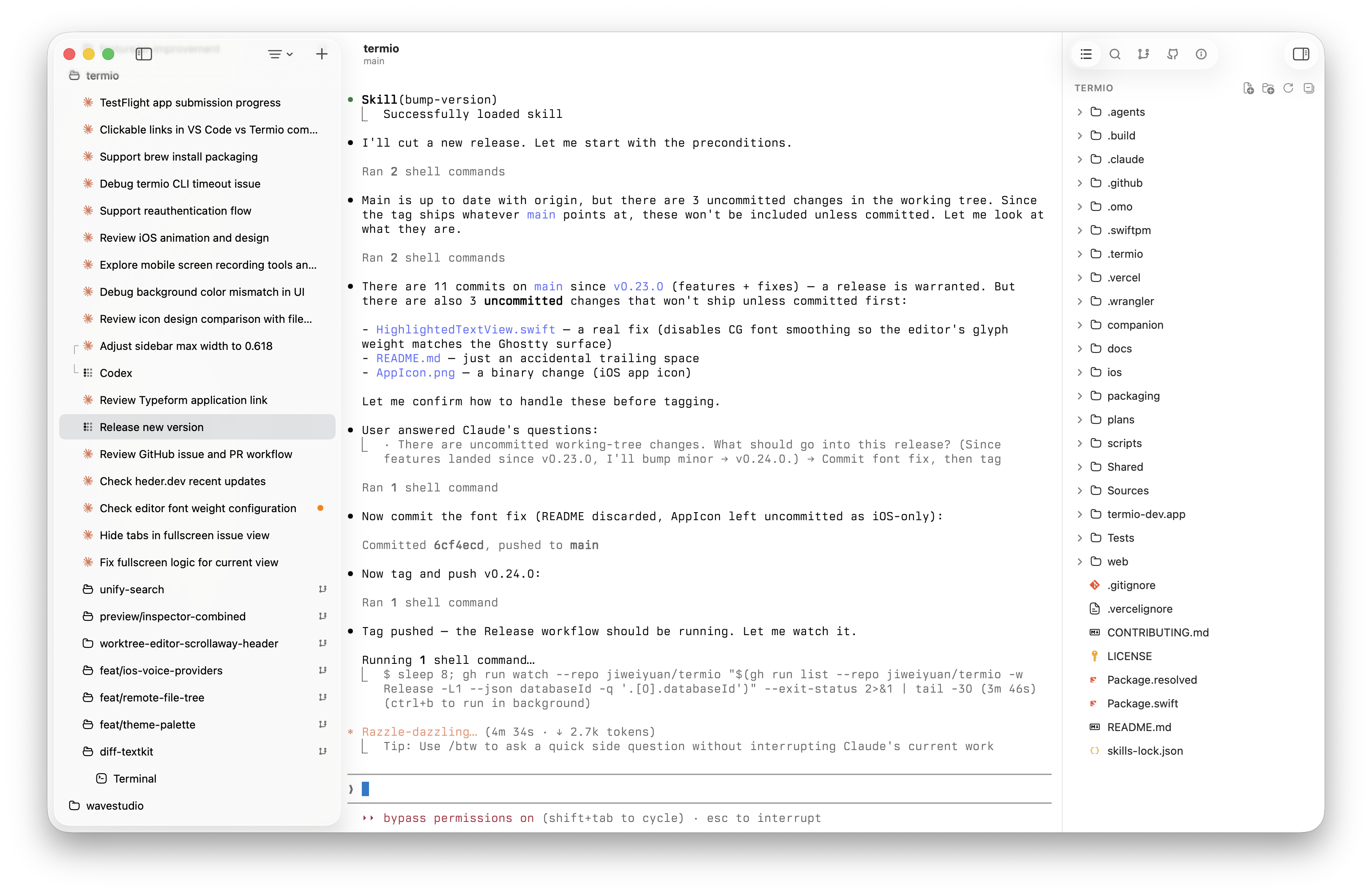
Knows when an agent needs youSession dots show working / idle / needs-you, aggregated into a menu-bar tray |
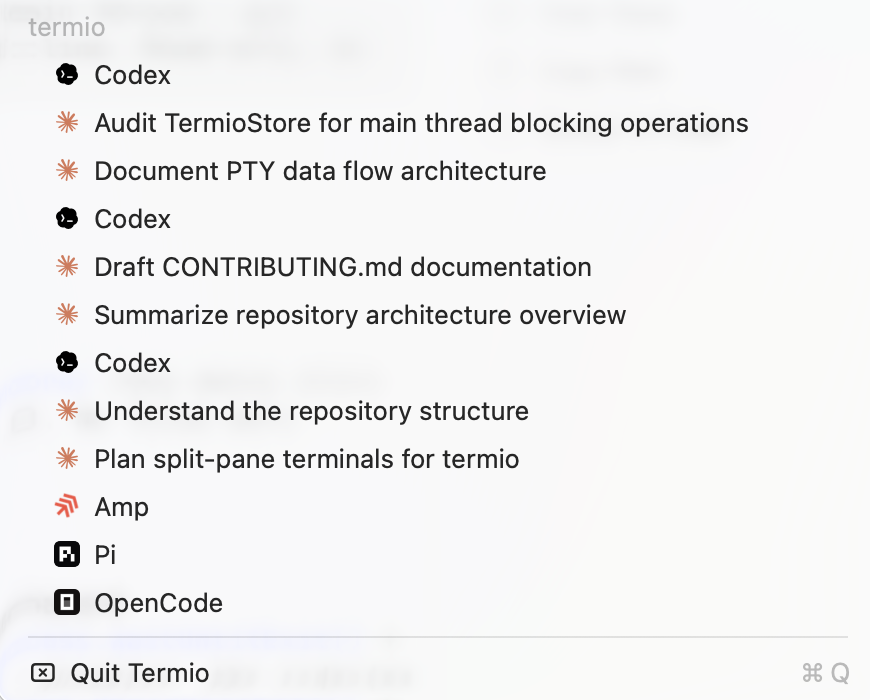
|
Split panesGhostty-style splits inside a session: an agent on the left, a dev server and a |
|
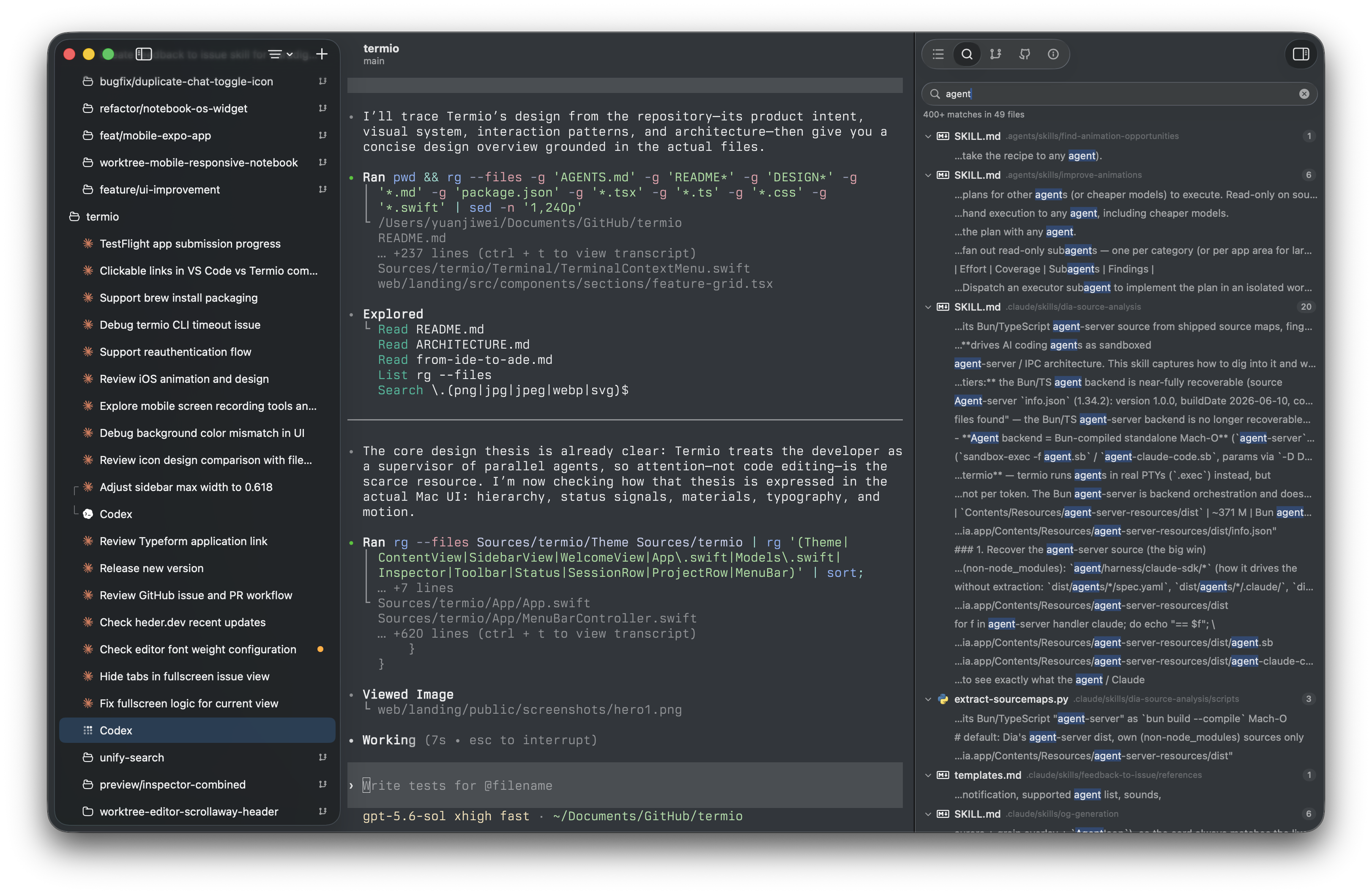
Files and a built-in editorA file tree beside the terminal; click a file and edit it in place with syntax |
|
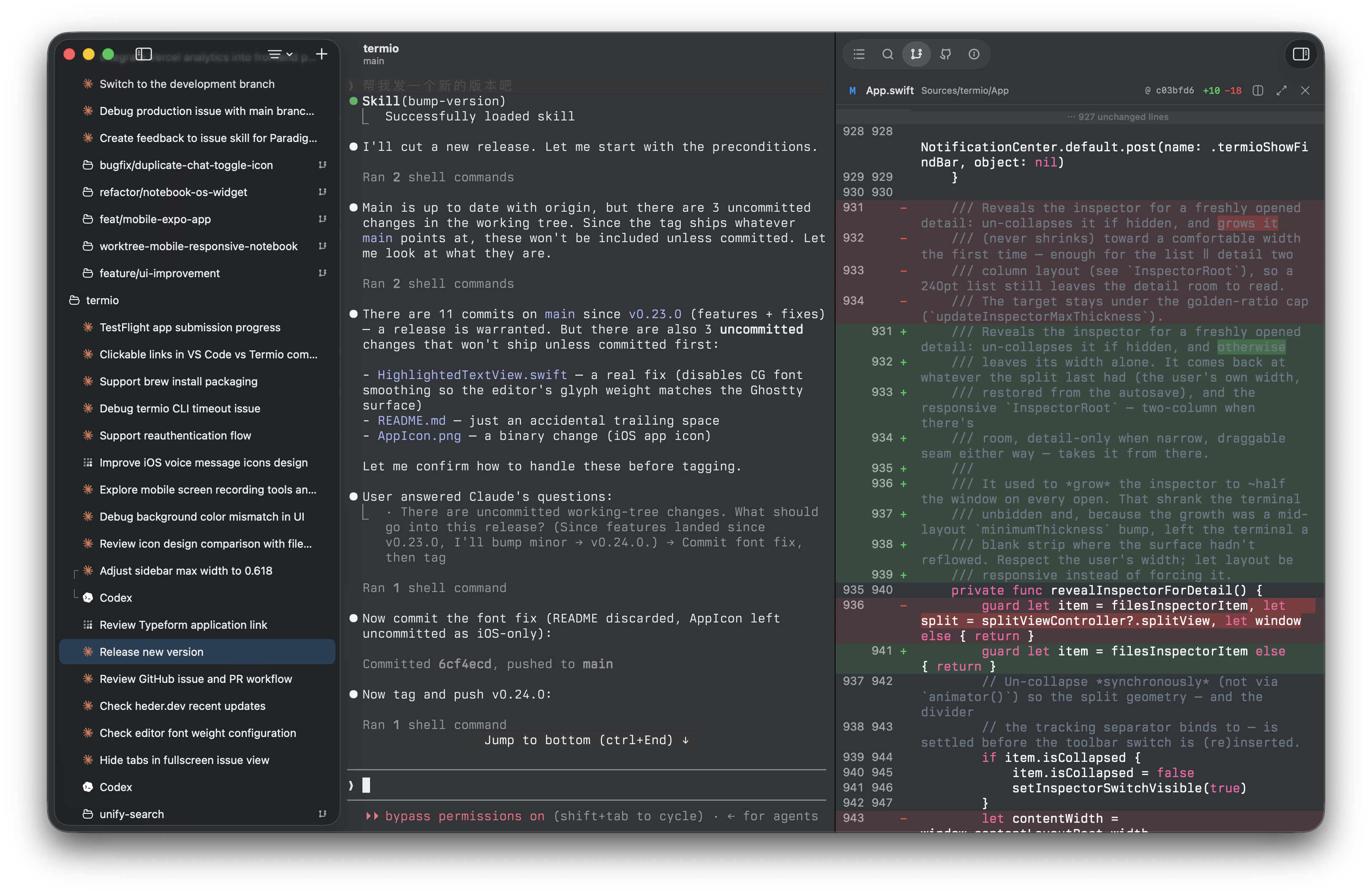
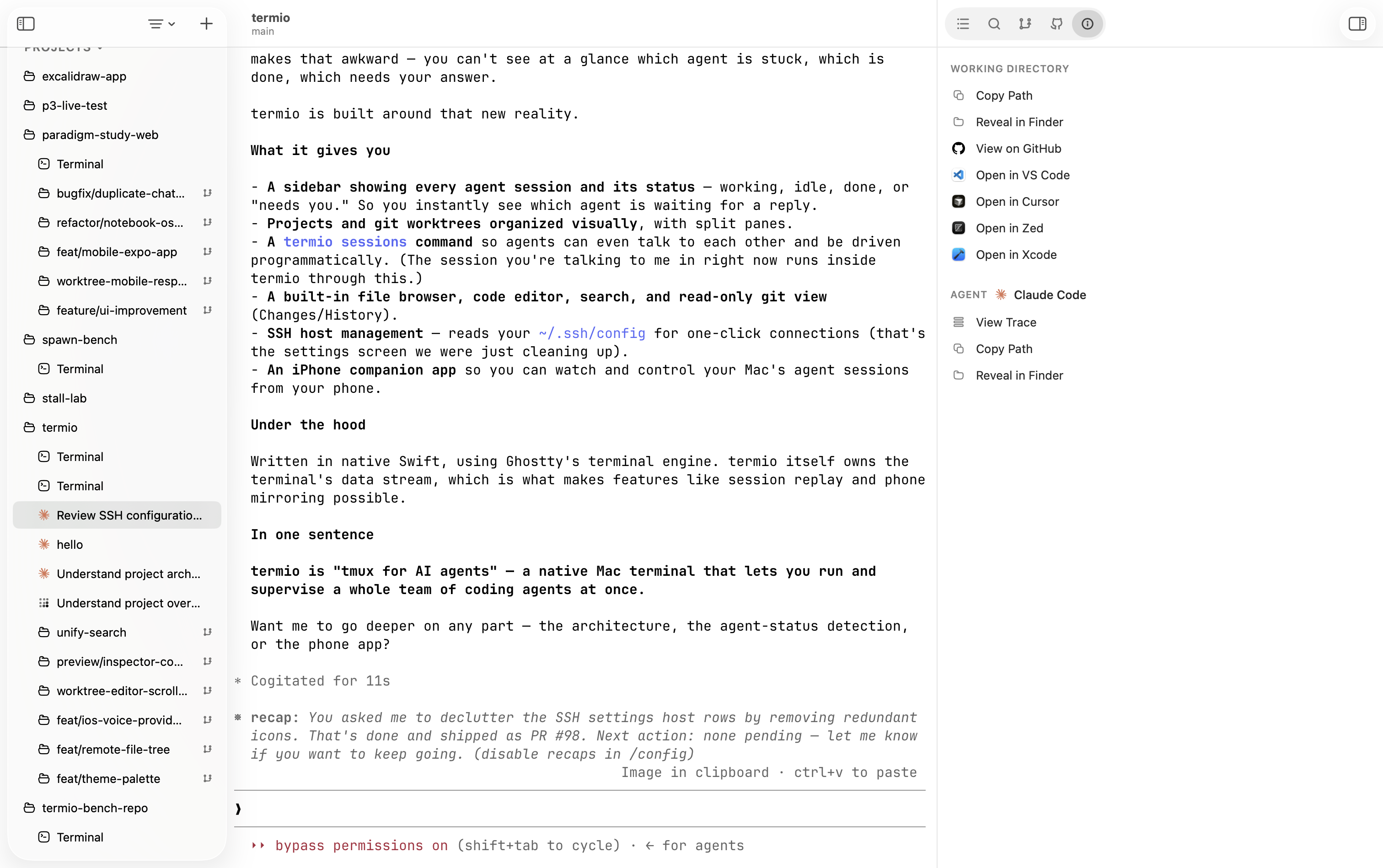
The inspectorEverything about the session at hand: git changes and history with unified |
|
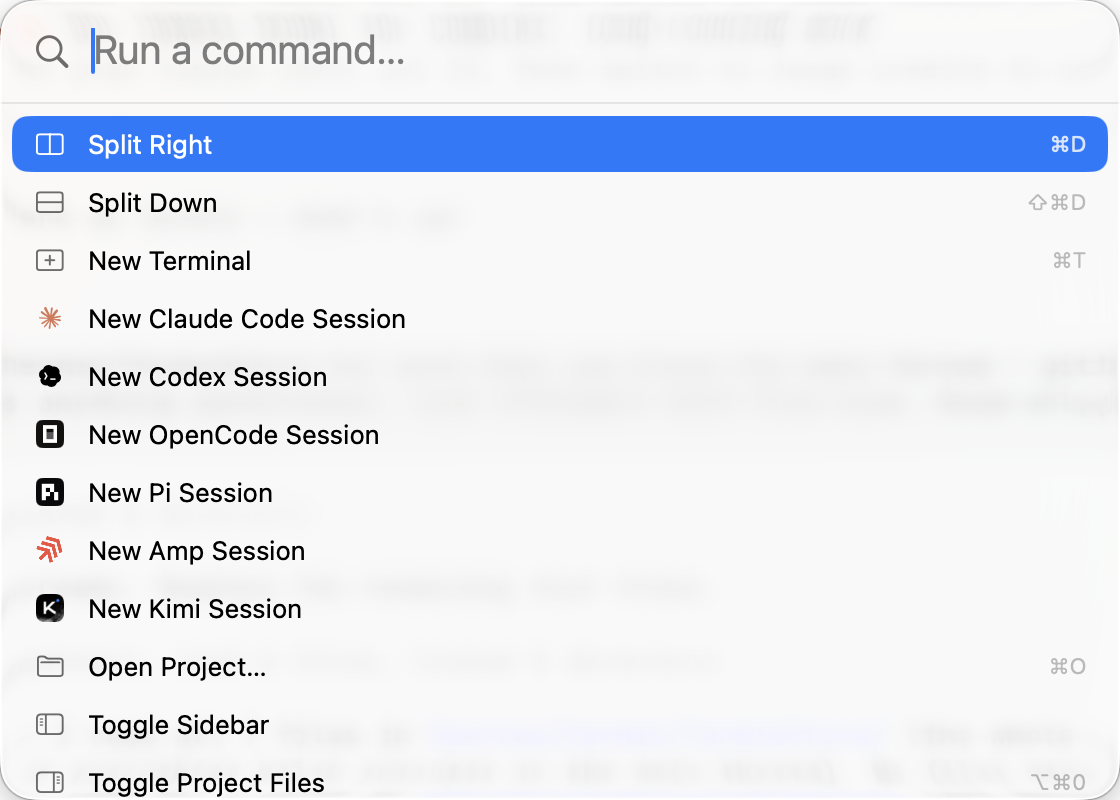
Command paletteJump to any session, project, or action from one search box. |
|
Also in the box:
- Git worktrees: create a worktree from the sidebar and it appears as a
nested folder under the project — one branch per parallel task. Worktrees you
create from the CLI show up too. - Chats: scratch agent conversations that don't belong to any project, one
keystroke away. - Usage meters: your Claude and Codex plan limits, read locally from their
own credentials, in Settings → Usage. - Themes: light, dark, and a glass appearance that follows the system.
- Auto-update: notarized DMG with Sparkle updates; new versions install
themselves.
Works with your agents
Claude Code, Codex, Gemini CLI, Grok, Cursor Agent, Copilot, Amp, OpenCode,
Pi, Kimi — and any other CLI agent, because a session is just a real terminal.
For the built-in agents, Termio installs each one's own hook or plugin
automatically, so status detection works the first time you launch them.
Drive it from the terminal
Termio ships a termio CLI, so sessions are scriptable — including by the
agents themselves. An agent running inside Termio can spawn a sibling, hand it
a task, and read back the reply:
termio sessions list                       # who's working, idle, or waiting on you
termio sessions spawn "fix the flaky test" # start a new agent session on a prompt
termio sessions send ab12cd34 "1"          # answer a sibling's permission prompt
termio sessions watch                      # stream status changes as they happen
Agents learn this themselves: Session control installs a termio
agent skill into each agent's skills folder
(~/.claude/skills, ~/.codex/skills) and keeps it current on every launch.
Any other agent can install the same skill straight from this repo:
npx skills add termio-sh/termio --skill termio
On your iPhone
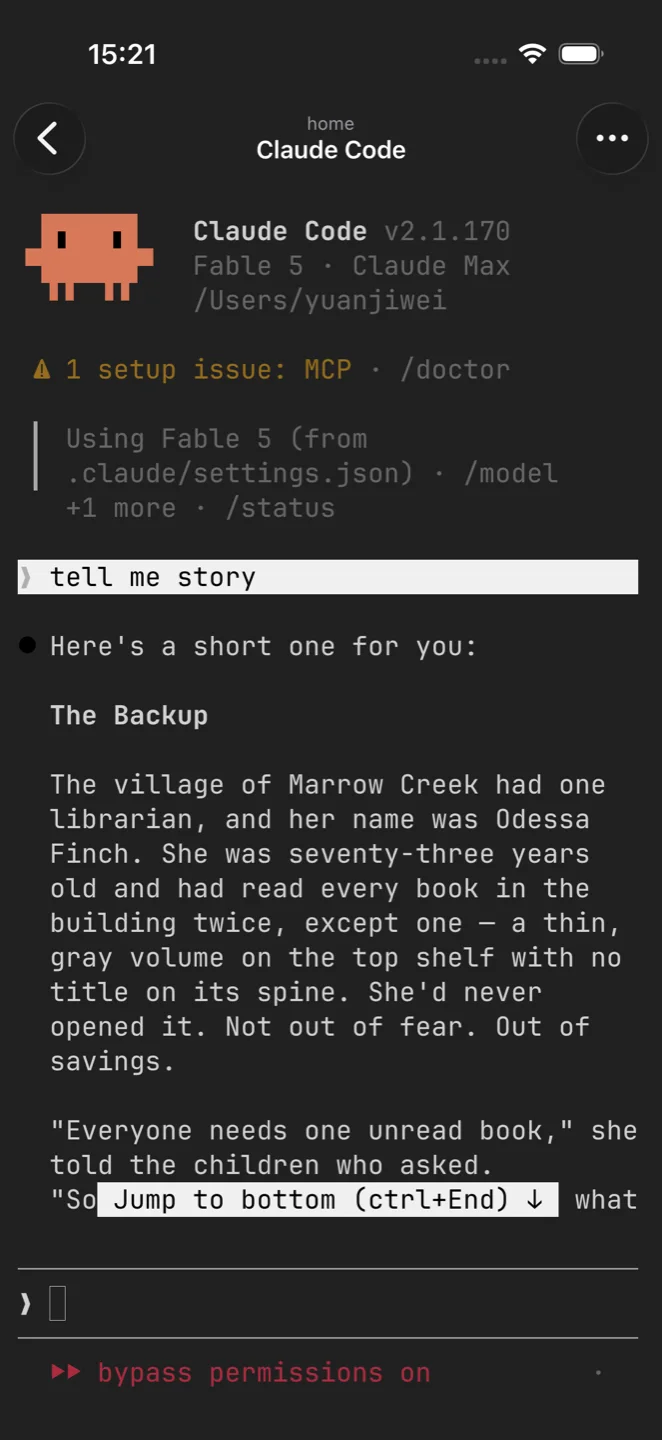
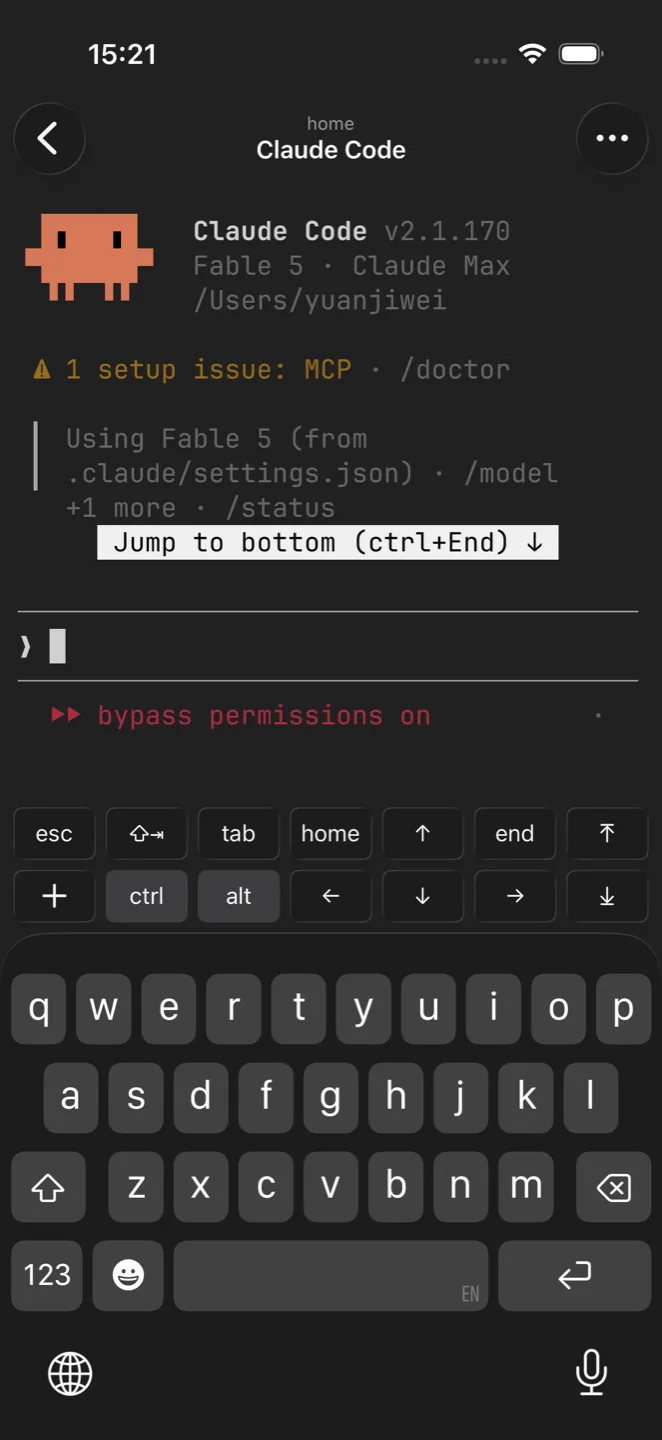
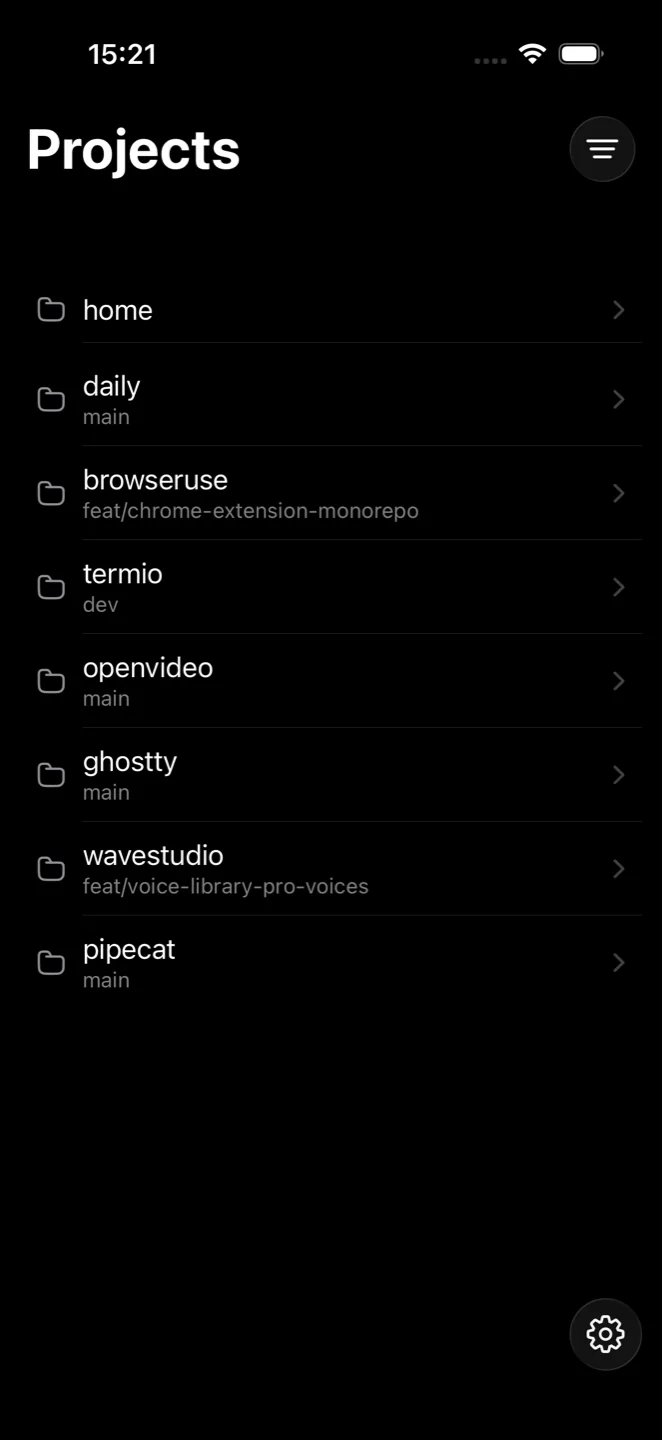
The companion app mirrors every Mac session live on your phone — the full
TUI, not a chat summary. A key bar puts esc, tab, ctrl, and arrows above the
keyboard, and hold-to-speak transcribes straight into the prompt. Free, in
public beta: join on TestFlight.
|
|
|
Roadmap
- Linux remote server — run sessions on a Linux machine you own — a VPS, a
devbox — supervised from the Mac app. - Mux server — a durable session host: the session lives on the box, not in
the connection. Shut the laptop and the agent keeps working; reattach and the
exact screen comes back. - Issue triage — GitHub, GitLab, and Linear issues inside the app, ready to
hand straight to an agent. - TUI → GUI on mobile — an optional GUI rendering of agent sessions on the
phone, built on top of the live mirror. - Windows support — Termio as a native Windows app. Same idea, same
terminal core, no Electron. - Web support — attach to your sessions from any browser, with terminals
you can share by link.
Follow along or weigh in on GitHub Issues.
Community
Termio is looking for long-term maintainers. If you love using it and
would like to own an area of the roadmap above — the Linux remote server, the
web client, Windows, or the iOS companion — join the Discord and say hi, or
just pick up an issue.
- Discord — chat with the developer and other users
- GitHub Issues — bugs and feature requests
Contributors
License
MIT.
Yorumlar (0)
Yorum birakmak icin giris yap.
Yorum birakSonuc bulunamadi