NEOTH
Health Uyari
- License — License: Apache-2.0
- Description — Repository has a description
- Active repo — Last push 0 days ago
- Low visibility — Only 5 GitHub stars
Code Gecti
- Code scan — Scanned 12 files during light audit, no dangerous patterns found
Permissions Gecti
- Permissions — No dangerous permissions requested
Bu listing icin henuz AI raporu yok.
Local-first personal AI daemon in Rust — five-tier memory, consent-gated tools, WASM plugin sandbox, multi-provider LLM routing, channels, GUI, signed audit logs, and Babel-Index collapse prediction on its own runtime.
NEOTH
Your private AI buddy. Loyal to you. Useful everywhere.
One memory. Three brain paths. Five memory tiers + your vault. Local-first by default.
NEOTH is the personal AI system for people who want a real assistant, not a forgetful chatbot. It remembers what you approve, helps in daily life, codes seriously, connects to your tools, runs on your own machine, and leaves proof for every sensitive decision.
Normal user? Open the GUI and talk — no YAML. · Pro? Every claim has a CLI command that proves it. · Skeptic? 15 minutes, proof on your own machine.
Install · Why NEOTH · Demos · DAUs + Pros · Privacy · Coding · Babel-Index · Comparison · Docs






Install
NEOTH is at the 1.0 release-candidate stage (current crate version
1.0.0-beta.4). It is not yet published to crates.io, so install from source
or the bootstrap script —cargo install neothwill land with the 1.0 release.
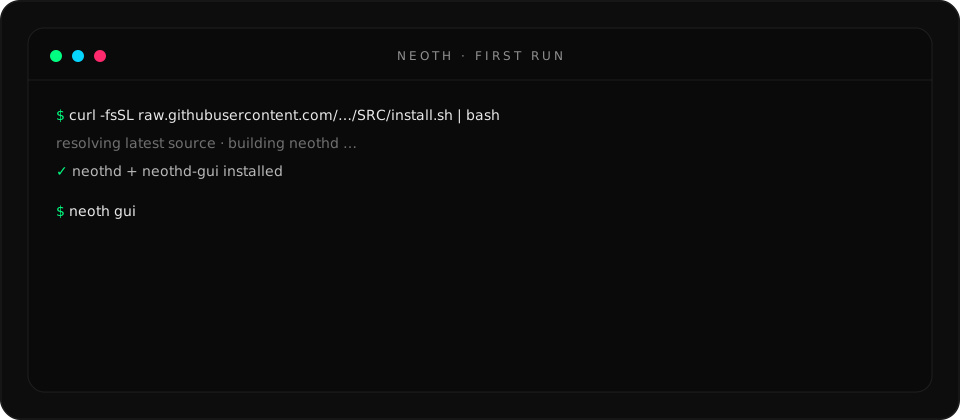
One-command install (Linux/macOS):
curl -fsSL https://raw.githubusercontent.com/The-Geek-Freaks/NEOTH/main/SRC/install.sh | bash
neoth gui
Windows (PowerShell):
irm https://raw.githubusercontent.com/The-Geek-Freaks/NEOTH/main/SRC/install.ps1 | iex
neoth gui
From source:
git clone https://github.com/The-Geek-Freaks/NEOTH
cd NEOTH/SRC
cargo install --path neothd
cargo install --path neothd-gui
neoth gui
Then run the health check:
neoth doctor
neoth doctor --explain "freedom.yaml"
The wizard asks normal questions: who you are, what NEOTH may remember, whether
you want local-only or cloud providers, which channels to connect, and how much
autonomy NEOTH gets. YAML is optional. The happy path is a GUI path.
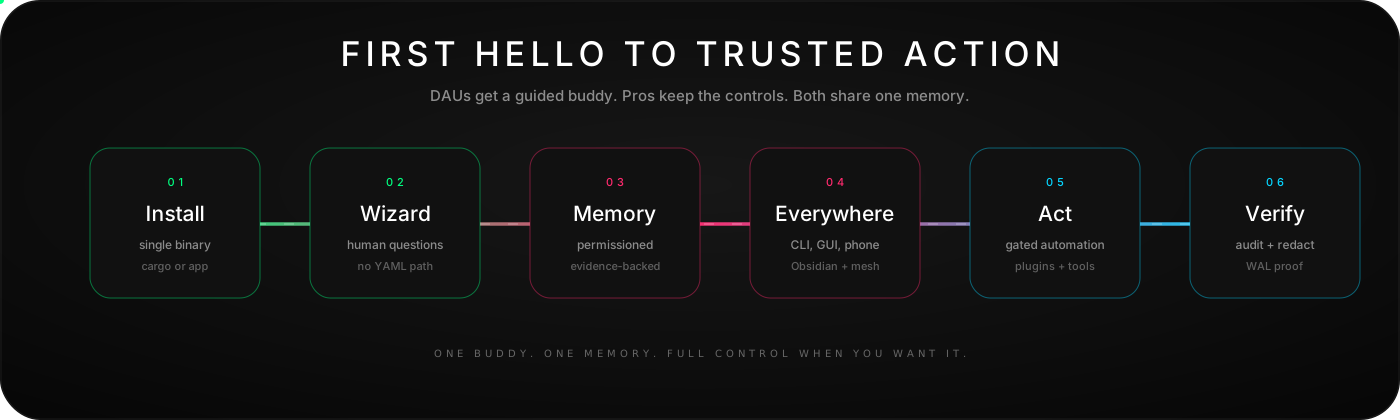
Demo Loops
| First run | Memory proof |
|---|---|
 |
 |
| Coding buddy | Privacy audit |
|---|---|
 |
 |
Why NEOTH
Most AI tools are brilliant strangers. They can answer one prompt, but they do
not really know you, cannot prove what they remembered, and quietly move the
trust boundary to someone else's backend.
NEOTH is built around a different promise:
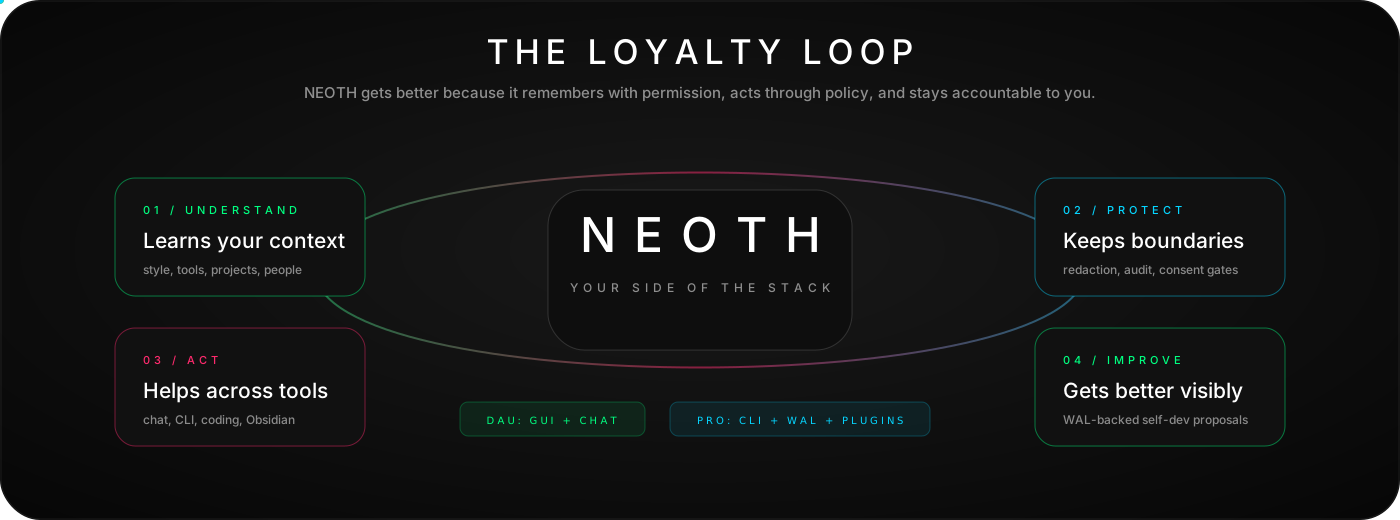
The AI should be loyal to the user, not to a platform.
That means:
| Principle | What it means in practice |
|---|---|
| Your memory | Profile facts, project context, decisions, and recall live in your NEOTH home. |
| Your consent | Sensitive profile changes, provider routes, plugins, and external actions are inspectable. |
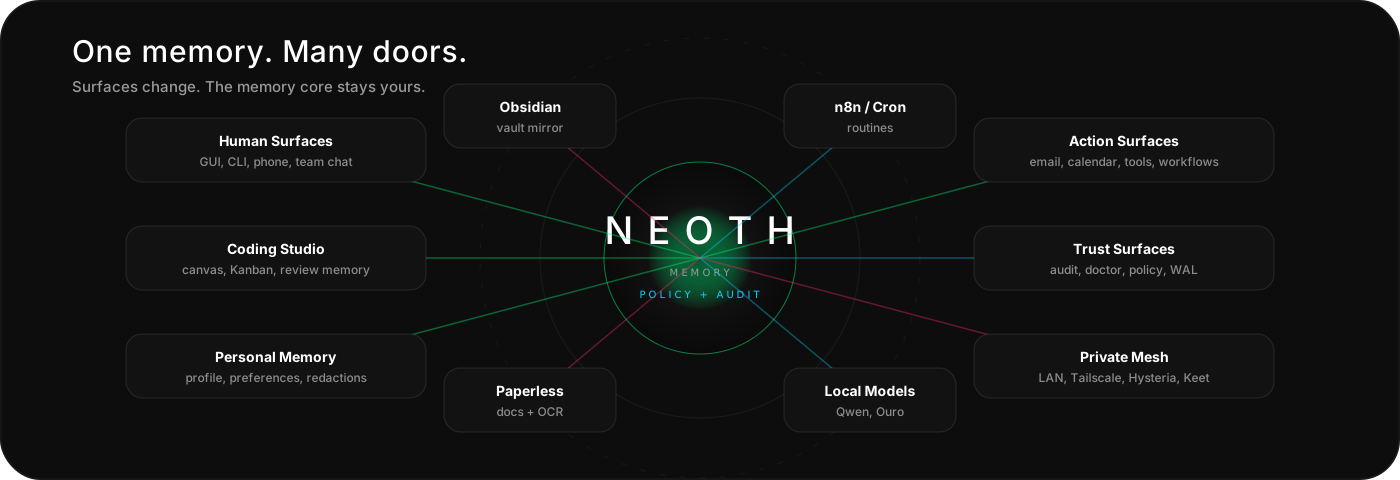
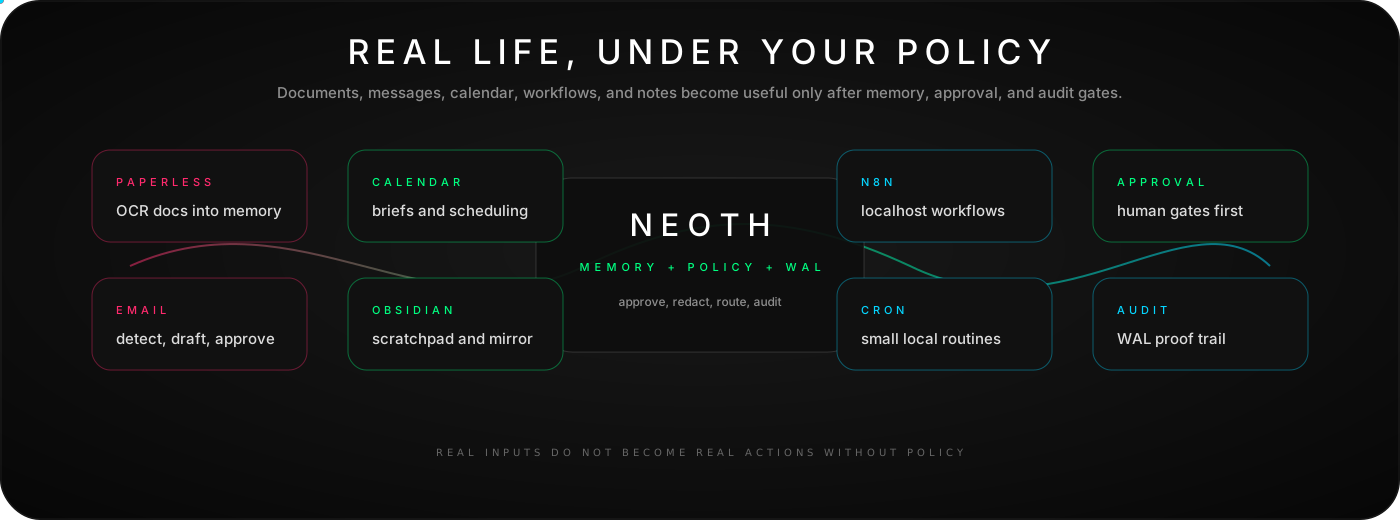
| Your tools | CLI, GUI, chat channels, Obsidian, Paperless, email, calendar, n8n, local models, and private mesh. |
| Your proof | WAL-backed audit, evidence-linked profile facts, plugin capability logs, and privacy commands. |
| Your upgrade path | Starts simple, scales into a serious operator runtime without switching products. |
For Normal Users And Pros
NEOTH is deliberately not only for developers. The core product is a buddy that
can be used by a normal person, while still staying deep enough for a senior
operator.
| If you are a normal user | If you are a pro |
|---|---|
| Open the GUI and talk normally. | Use the CLI, local models, WAL, policies, plugins, and cluster commands. |
| Say "remember this" and approve what matters. | Inspect exact evidence, confidence, provider destination, and redaction state. |
| Connect Telegram, Slack, WhatsApp, Obsidian, Paperless, email, and calendar. | Script workflows, bind n8n, define hooks, use MCP, and review plugin capabilities. |
| Ask "what did we decide?" and get useful recall. | Run neoth recall, neoth verify, neoth privacy audit, neoth plugin ledger. |
| Let NEOTH explain setup problems in plain language. | Pipe neoth doctor --output json into CI or fleet checks. |
What NEOTH Does
| Area | 1.0 target behavior |
|---|---|
| Buddy | Keeps a durable personal profile, remembers approved facts, adapts to your style, and asks before crossing trust boundaries. |
| Brain | Routes work through role-bound brain paths for fast answers, deeper reasoning, and verification. |
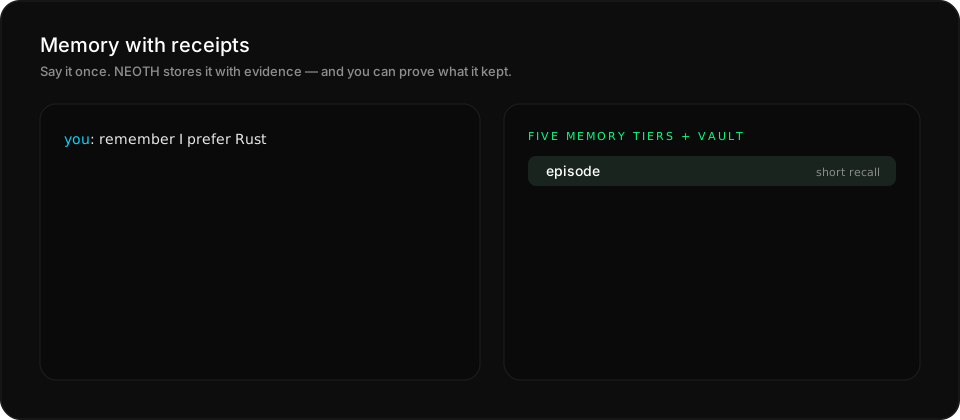
| Memory | Uses five durable memory tiers — episode, profile, ground truth, consolidated, long-term — plus your external vault (Obsidian/Paperless) ingested into them. |
| Daily life | Ingests Paperless documents, email, calendar, notes, files, images, audio, and video into reviewable memory. |
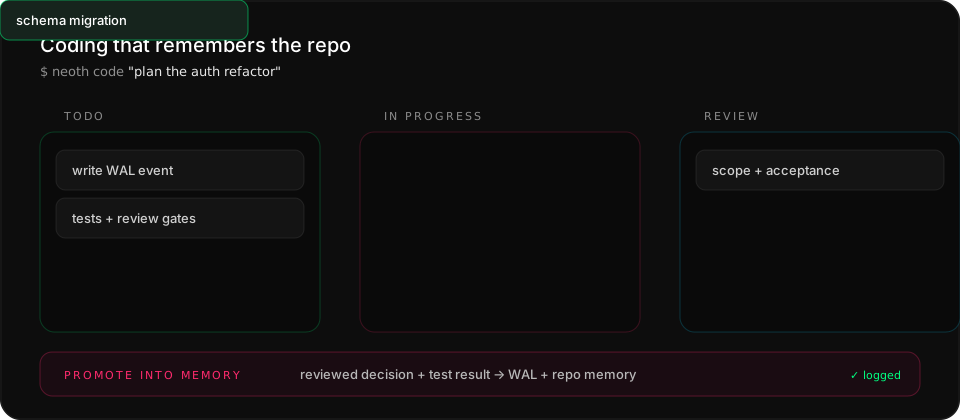
| Coding | Plans work, tracks tasks on a canvas/Kanban board, runs checks, learns repo context, and promotes reviewed decisions into memory. |
| Self-diagnosis | Scores its own event stream for collapse risk (Babel-Index): seven variables per rolling window, pre-registered failure labels, early warning before the agent loop — not after. |
| Self-reflection | Looks back on its own work — weekly topic recap plus opt-in daily and yearly summaries archived and written to Obsidian as daily notes / yearly summaries — runs an opt-in weekly Hacker News tech-currency scan that flags trending topics your skills don't cover, and proposes review-gated SkillOpt improvements to its own skills (never auto-applied). |
| Self-evolution | Dreams nightly (neoth dream now): clusters the week's episodes into themes and writes them to Obsidian. Proposes, council-reviews, and applies upgrades to its own skills with rollback (neoth self-improve). Notices its own behavioral patterns and proposes changes you approve or decline (neoth self-dev). Distills tool sequences you repeat into candidate skills (neoth distill). |
| Migration | Brings your history with you: neoth-migrate imports Claude Code / Codex / Gemini sessions as searchable memory; neoth transfer export moves whole memories between machines as X25519-encrypted, Ed25519-signed bundles. |
| Autonomy | Four operator-set levels (neoth autonomy strict..full) plus one-word neoth sudomode; the security floor never moves regardless of level; your own plain-YAML constitution is injected before every prompt (neoth moral-core). |
| Gateway | OpenAI-compatible endpoint (/v1/chat/completions): point Cursor, Aider, or Continue at NEOTH and every call gets your provider routing, council, and audit trail. |
| Loops | neoth loop run "<goal>" --until "<criterion>" — bounded autonomous iteration with L1-L3 budget ladders, full history in neoth loop history. |
| Recon | Authorized-engagement recon through gated uncover (exposed-host discovery) and tlsx (TLS/cert intel) shims — refused under Strict autonomy and audit-logged. |
| Automation | Runs small local cron jobs and bigger localhost n8n workflows through the same policy and audit layer. |
| Channels | Talks through GUI, CLI, Telegram, WhatsApp Business, Slack Socket Mode, Discord, and Keet-style private channels. |
| Private mesh | Pairs nodes over LAN/mDNS, Tailscale, Hysteria, and consent-gated cluster discovery. |
| Plugins | Loads skills and WASM plugins behind capability gates, signature checks, revocation, and hostcall audit. |
| Doctor | Explains broken setup, missing keys, model cache problems, channel wiring, disk issues, plugin state, provider flapping, and cluster discovery. |
Privacy
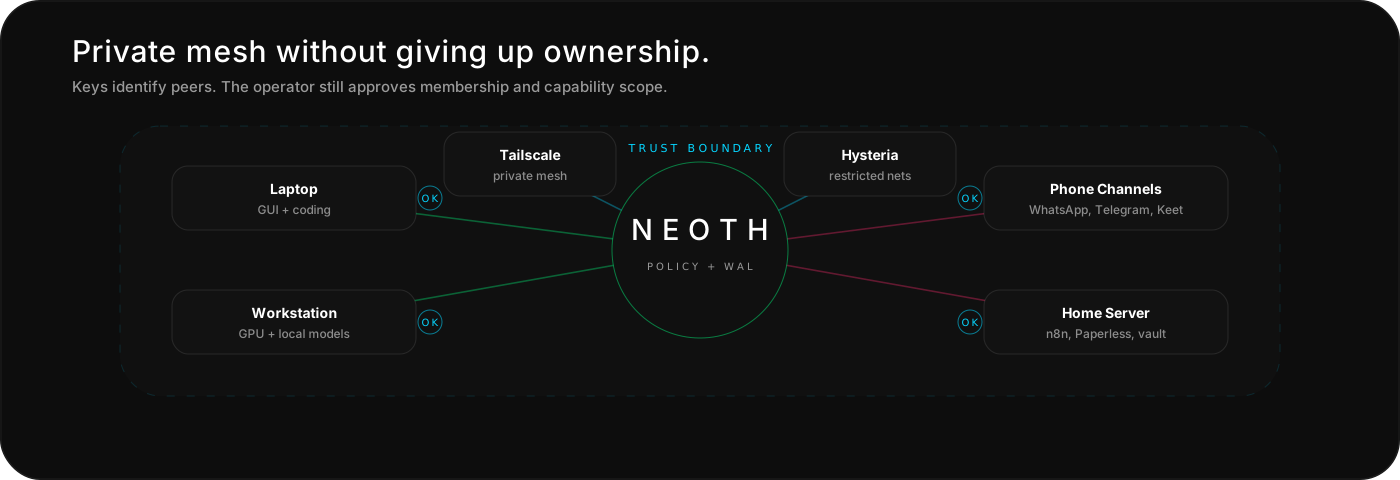
NEOTH is local-first and fail-closed by design.
| Guarantee | How to verify |
|---|---|
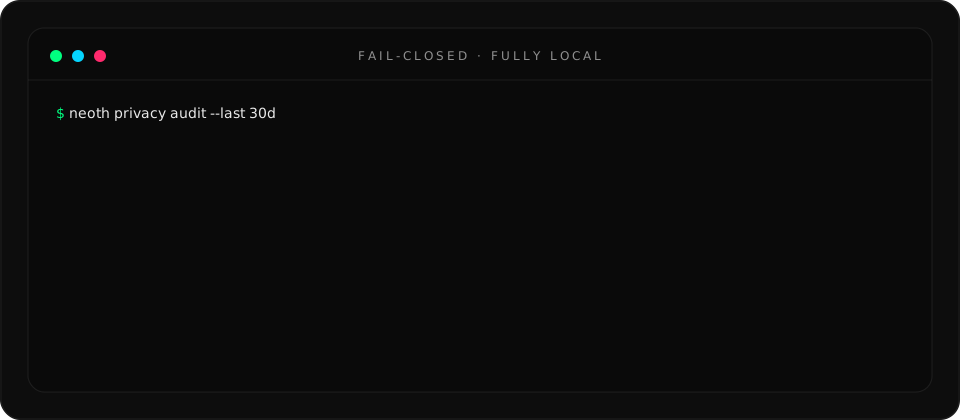
| No silent profile extraction to cloud | neoth privacy audit --last 30d (recent provider calls + profile writes + channel egress) |
| No silent provider fallback | neoth provider list and neoth wal show --type provider_fallback_attempted (every 429 failover is a durable audit frame) |
| No ambient plugin power | neoth plugin ledger (capabilities used) and neoth wal show --type plugin_cap_denied (over-level calls refused at runtime) |
| No invisible memory mutation | neoth profile pending and neoth profile show |
| No unverifiable history | neoth verify |
| No accidental channel writes | approval policy plus WAL events for outbound actions |
Local-only mode is a first-class path:
neoth preset activate fully-local
neoth preset apply fully-local
neoth doctor
neoth privacy audit --last 30d
Read the full privacy model in docs/privacy.md.
Security-research skills ship enabled by default. NEOTH bundles three dual-use
registers —lowkey_base(authorised security research / defensive analysis),raskal
(authorised red-team / offensive-tooling), andarchon(meta-reasoning orchestrator).
They are operator-authorisation-scoped — they refuse mass-harm, untargeted destruction,
and out-of-scope targets — and ship enabled so an authorised pentester gets working
tooling instead of refusals. Don't want them? Disable any subset infreedom.yaml:skills: disabled: - raskal - archon(Or suppress all skill injection for benchmark/eval runs with
skills.disabled_for_eval_sessions: true.)
Why it holds up
The differentiators are mechanisms you can inspect, not slogans.
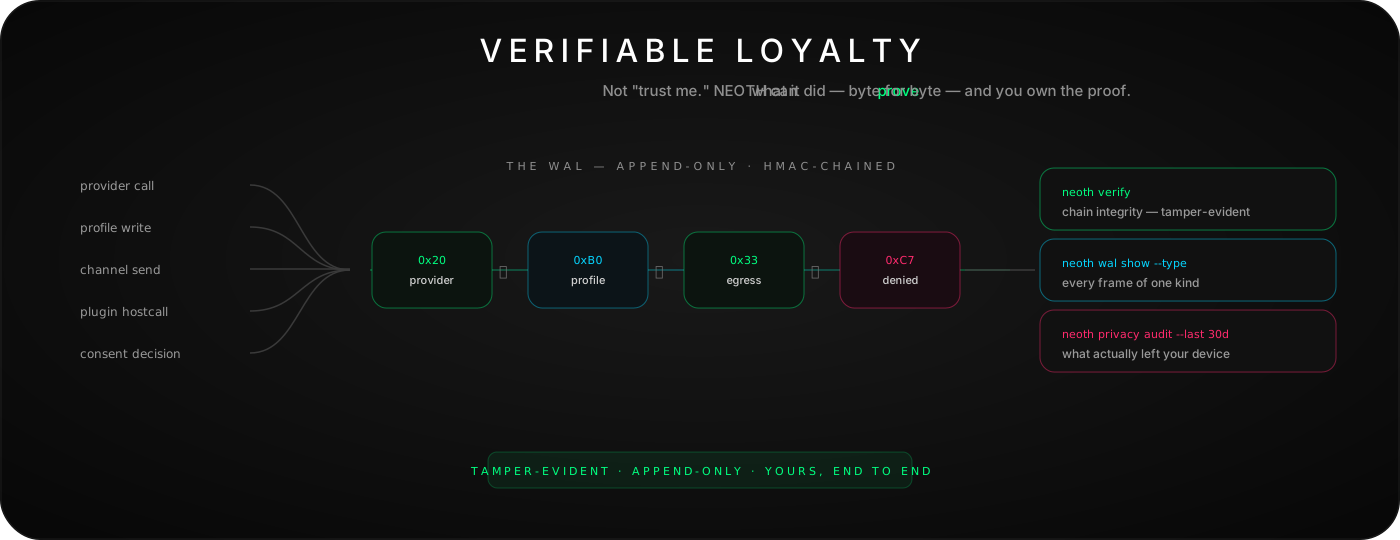
Every sensitive action lands in an append-only, HMAC-chained WAL — and you get
the commands to prove what it did: neoth verify (chain integrity),neoth wal show --type <event> (every frame of one kind), neoth privacy audit --last 30d
(what actually left the device).
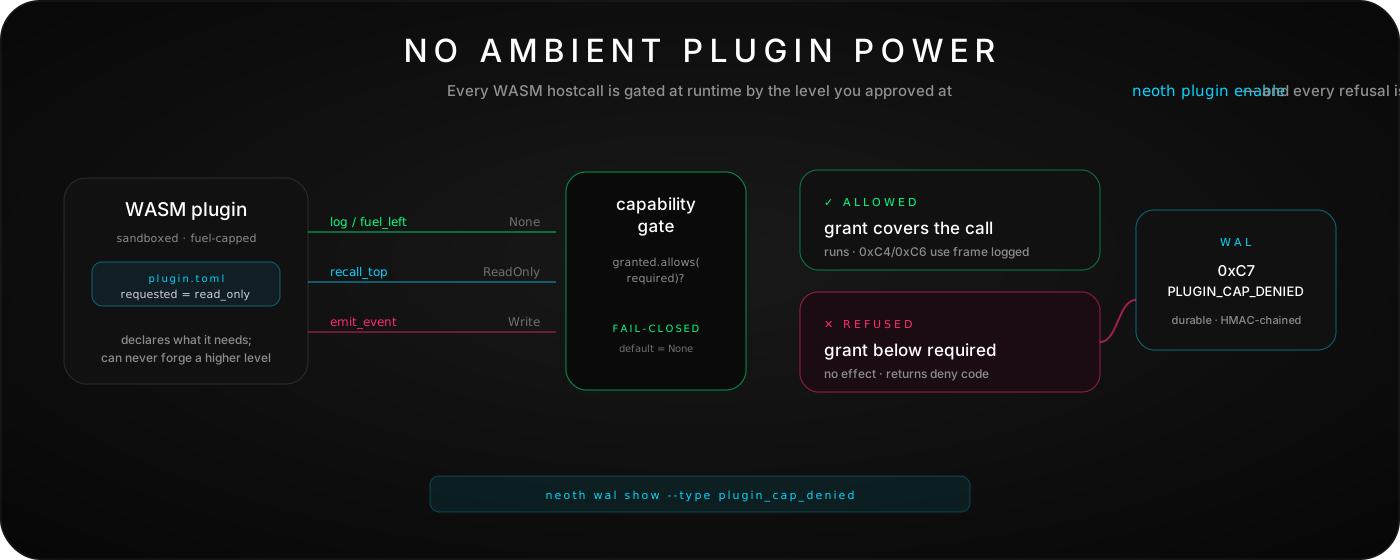
A WASM plugin can only use the hostcalls its manifest declared and you approved atneoth plugin enable; a call above that level is refused fail-closed at runtime and
recorded as a 0xC7 PLUGIN_CAP_DENIED audit frame — visible inneoth wal show --type plugin_cap_denied, never silent.
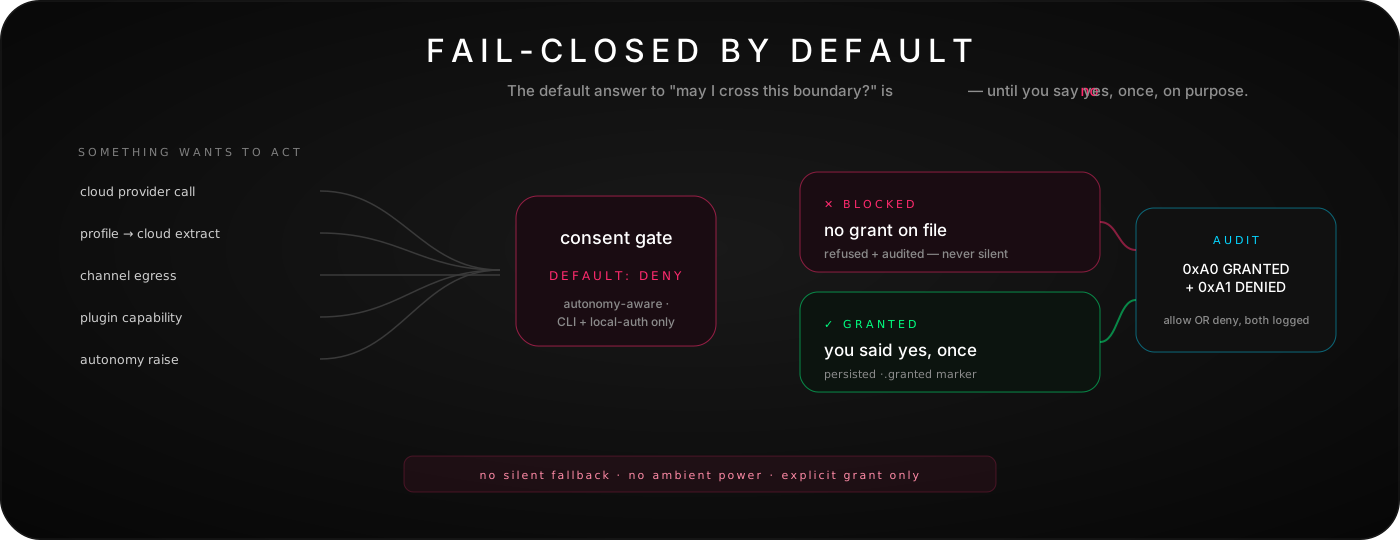
Crossing a trust boundary — cloud call, profile-to-cloud extract, channel egress,
plugin capability, autonomy raise — is denied by default until you grant it once,
on purpose. Both the grant and the refusal are logged.
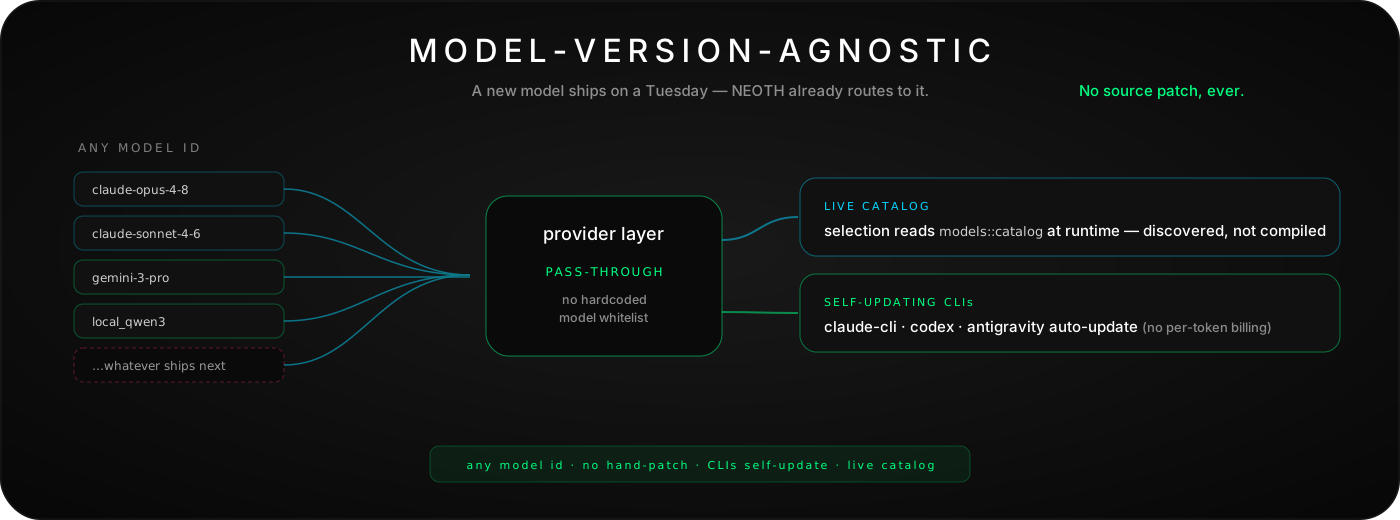
Any model id passes through the provider layer with no hardcoded whitelist; the
managed CLIs (claude-cli / codex / antigravity) self-update and the model catalog is
discovered at runtime — so a new model ships and NEOTH already routes to it, no source
patch.
Coding Buddy
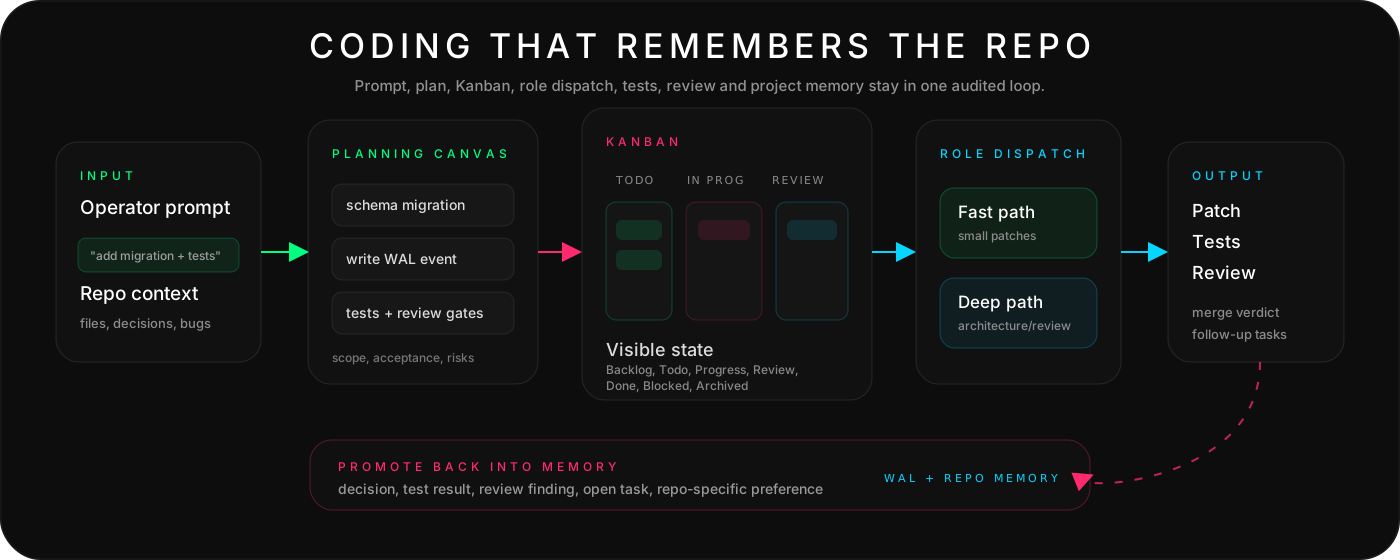
NEOTH is not a coding toy bolted onto a chat app. The coding path is designed
for visible planning, reviewable execution, and memory that improves future
work.
| Step | What NEOTH does |
|---|---|
| Plan | Turns a request into a scoped plan, risk list, and acceptance checks. |
| Map | Reads repo context, prior decisions, docs, issue state, and coding memory. |
| Track | Keeps backlog, todo, in-progress, review, done, blocked, and archived states visible. |
| Execute | Runs local checks, cargo/test/lint loops, and targeted implementation flows. |
| Review | Separates code generation from review, promotes only validated decisions into memory. |
| Improve | Learns repo conventions and recurring fixes without swallowing secrets or unapproved facts. |
Operator commands:
neoth code "plan the auth refactor"
neoth kanban watch
neoth code check
neoth recall "why did we choose this storage layout?"
Brain And Memory
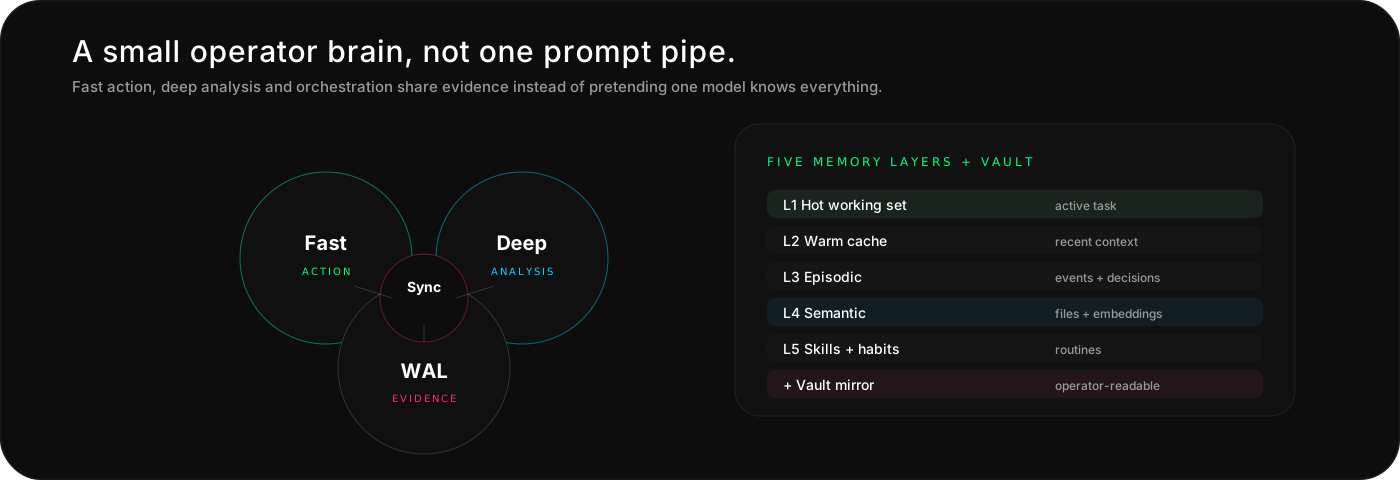
NEOTH uses role separation because a loyal assistant should not treat every task
as one giant prompt.
| System | Job |
|---|---|
| Left path | Fast, pragmatic help, routing, daily buddy work, small tasks. |
| Right path | Deeper reasoning, planning, alternatives, difficult code and architecture. |
| Corpus callosum | Arbitration, evidence collection, contradiction handling, consensus, escalation. |
| Five memory tiers + vault | Short recall, personal profile, ground truth anchors, consolidated facts, long-term knowledge — plus ingested external-vault context. |
The point is not mystical branding. The point is operational separation: fast
tasks stay fast, serious tasks get more scrutiny, and durable memory gets
evidence instead of vibes.
Each path binds to its own provider — Anthropic on the left, a local model on
the right, OpenRouter as arbiter, any mix you want — and hard questions go to
a council: the paths argue, dissent is recorded, and the runtime tracks
which path wins which kind of argument over time and reweights routing
accordingly.
neoth hemispheres set --role right --provider local_ouro
neoth council voices
neoth ecology winner-chain   # who has been winning the arguments, and why
Facts you never want the model to overwrite live in a separate register:neoth groundtruth add pins them immutably, and NEOTH flags contradictions
across sessions for you to resolve instead of silently picking a side.
Babel-Index: It Predicts Its Own Collapse
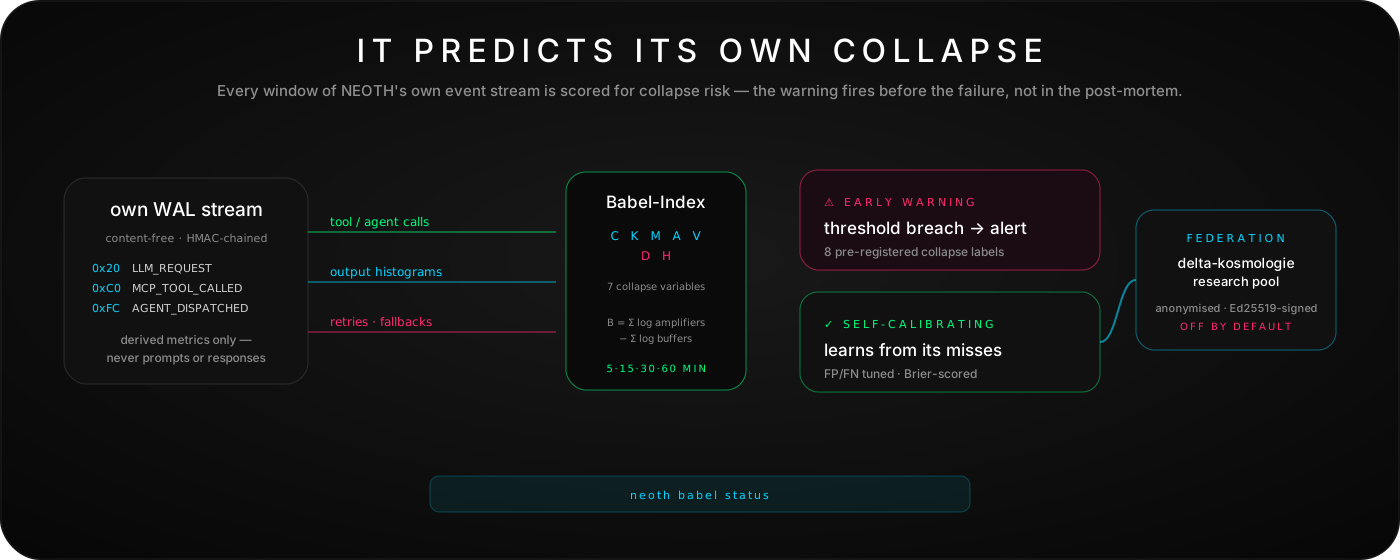
Agent systems fail in recognizable shapes — retry storms, agent loops,
context death spirals. Most frameworks let you find them in the post-mortem.
NEOTH watches its own WAL event stream, scores every rolling window with
seven collapse variables (coupling, convergence, pressure, agent density,
throughput vs. diversity and redundancy buffers), and warns you before the
failure. The failure definitions are deterministic and pre-registered; the
predictor self-calibrates against its own misses and reports a Brier score,
so the accuracy claim is measurable instead of asserted.
neoth babel status      # threshold, calibration, latest scores
neoth babel windows     # the actual measurements, window by window
There is a bigger bet underneath: the collapse model comes from
delta-kosmologie, an
open framework asking whether one scalar family predicts collapse across
complex systems in general. Opting in (off by default, consent- and
autonomy-gated) federates anonymised, Ed25519-signed, content-free window
records into the shared falsification pool — making NEOTH the first
production instrument of an open research program, with
docs/babel-index.md spelling out every rule.
Shipped, Easy To Miss
Small commands that quietly carry a lot of the product. All of these work
today:
| Command | What you get |
|---|---|
neoth dream now |
Cluster recent episodes into themes, written to Obsidian as notes. |
neoth groundtruth ask "<q>" |
Query the immutable-facts register; contradictions get flagged, not overwritten. |
neoth identity merge |
The same person on Telegram, WhatsApp, and email becomes one identity. |
neoth recall-score |
LongMemEval-style memory benchmark with inter-rater kappa — prove recall quality. |
neoth memory-eval |
Reproducible recall benchmark in a temp DB; never touches real memory. |
neoth cost "<prompt>" |
Token count and dollar estimate before the call is made. |
neoth lease grant codex code:write --ttl 30m |
Time-limited capability grant that auto-expires; WAL-logged. |
neoth recipe share |
Prompt template as a neoth://recipe/… deeplink anyone can run with their own parameters. |
neoth adr extract |
Architecture Decision Records extracted from your sessions as structured files. |
neoth okf export |
Your memory as an interlinked Obsidian knowledge graph. |
neoth kanban watch --follow |
Live terminal feed of task progress, streamed from WAL frames. |
neoth companion pair-phone |
QR-code phone pairing over Noise-XX P2P; no relay server. |
Comparison
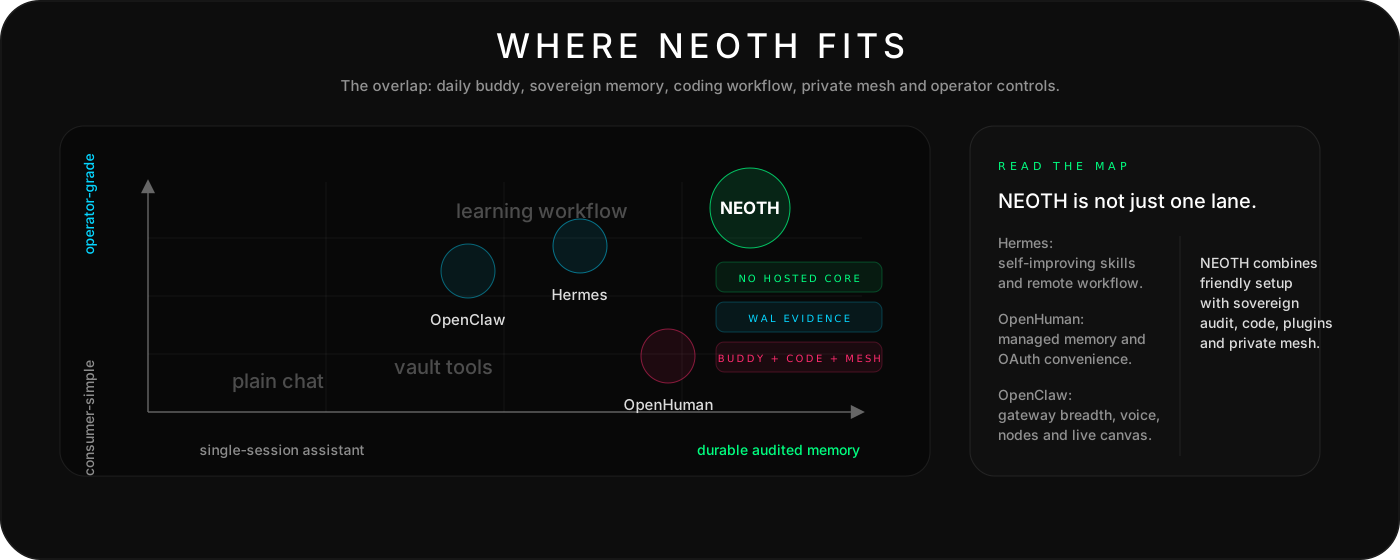
Different projects optimize for different jobs. NEOTH's bet is the harder
overlap: a DAU-friendly buddy, serious coding partner, local-first memory
system, private mesh, and inspectable operator runtime in one product.
Five things you will not find documented in any of the compared projects —
each with the command that proves it on your machine:
| Only in NEOTH | Prove it |
|---|---|
| Collapse prediction on its own runtime (Babel-Index) | neoth babel status |
| HMAC-chained audit log you can verify yourself | neoth verify |
| Evidence-linked profile memory behind explicit consent | neoth profile pending |
| WASM capability sandbox that refuses + audits over-level calls at runtime | neoth plugin ledger |
| Fail-closed trust boundaries as the default, not a setting | neoth privacy audit --last 30d |
| Capability | NEOTH | OpenHuman | OpenClaw | Hermes Agent |
|---|---|---|---|---|
| GUI-first normal-user onboarding | Yes | Yes | Partial | Yes (desktop app) |
| CLI/operator path | Yes | Partial | Yes | Yes |
| Local-first memory as default product shape | Yes | Partial | Yes | Yes |
| Fail-closed profile extraction | Yes | Partial | Partial | Partial |
| Evidence-linked profile facts | Yes | Partial | Partial | Partial |
| WAL/audit trail for sensitive actions | Yes | Partial | Partial | Partial |
| Five-tier memory model + vault ingest | Yes | No | No | Partial |
| Three role-bound brain paths | Yes | No | Partial | Partial |
| Collapse prediction on its own runtime (Babel-Index) | Yes | No | No | No |
| Coding canvas + Kanban | Yes | Partial | Canvas-focused | Desktop cockpit + Kanban |
| Obsidian/vault workflow | Yes | Yes | File-based | Context-file based |
| Paperless/email/calendar as memory inputs | Yes | Integrations | Skills/tools | Tools/skills |
| n8n localhost automation | Yes | No | Partial | Cron/tools |
| WASM plugin capability sandbox | Yes | No | Skills | Skills/tools |
| Private mesh with Tailscale/Hysteria/Keet path | Partial | No | Gateway/nodes | Gateway/platforms |
| Built for DAUs and pros at the same time | Goal | DAU-heavy | Power-user-heavy | Operator-heavy |
Competitor columns were re-verified against upstream releases on 2026-07-03
(Hermes v0.18.0, OpenClaw v2026.6.11, OpenHuman v0.58.7) — where a competitor
caught up, the table says so.
NEOTH is pre-1.0, so this table is honest about what is not finished: Private mesh
is Partial — node discovery, Tailscale/mDNS pairing, the consent gate, and transport
config ship today, but live cross-device memory sync (tracked as SL-01) is still in
progress. The WASM plugin capability sandbox (V10-04) ships in the native desktop
release binaries and is exercised by tests, but it is feature-gated (wasm-plugin-host)
— source builds opt in, and the headless cross-compiled server targets (musl /
aarch64-linux) omit it, the same native-only treatment as the OS clipboard. Built for
DAUs and pros is the explicit design goal, not a finished claim — it is the hard bet
NEOTH is making, and the single thing most worth holding it accountable to. Everything
marked Yes is implemented and exercised by tests; the live status of every line item is
in PLAN/PROGRESS_v1_0.md.
Read the detailed migration pages:
Doctor
Setup errors should not feel like archaeology.
neoth doctor
neoth doctor --list-checks
neoth doctor --explain "channels wiring"
neoth doctor --explain "model caches"
neoth doctor --output json
neoth doctor checks config, credentials, profile database, WAL, HMAC key,
disk space, local model caches, channel wiring, Node-backed providers, tmux for
Claude CLI, plugin host state, provider flapping, usage caps, cluster registry,
and mDNS announcer behavior. Warn/fail output points to the exact --explain
runbook so beginners get plain fixes and pros get scriptable diagnostics.
Docs
| Need | Doc |
|---|---|
| Start from zero | docs/quickstart.md |
| Install paths | docs/install.md |
| Privacy proof | docs/privacy.md |
| Verify the claims yourself | docs/evaluation.md |
| CLI reference | docs/cli-reference.md |
| Channels | docs/channels.md |
| Local models | docs/local-models.md |
| Providers | docs/providers.md |
| Plugins | docs/plugins.md |
| Babel-Index / collapse prediction | docs/babel-index.md |
| Architecture | docs/architecture.md |
| Release notes | docs/release-notes-v1.0.md |
| Security policy | SECURITY.md |
| Contributing | CONTRIBUTING.md |
Release Shape
NEOTH 1.0 is for one operator first: your machine, your memory, your private
tools, your approved network. It is not a hosted SaaS account, not a team
multi-tenant product, and not a black-box model router.
What works and what intentionally stays out of 1.0 is tracked in
docs/release-notes-v1.0.md.
Contributing
Small, focused PRs are welcome. Read CONTRIBUTING.md, run
the checks, and keep the product promise intact: simple for normal users,
serious for operators, loyal to the user.
License
NEOTH is dual-licensed under MIT OR Apache-2.0, at your option — see
LICENSE-MIT and LICENSE-APACHE.
Third-party notices: THIRD_PARTY_LICENSES.
Yorumlar (0)
Yorum birakmak icin giris yap.
Yorum birakSonuc bulunamadi