claude-model-router-hook
Health Gecti
- License — License: MIT
- Description — Repository has a description
- Active repo — Last push 0 days ago
- Community trust — 55 GitHub stars
Code Gecti
- Code scan — Scanned 12 files during light audit, no dangerous patterns found
Permissions Gecti
- Permissions — No dangerous permissions requested
Bu listing icin henuz AI raporu yok.
Claude Code hooks that auto-switch model tier based on task complexity
Claude Model Router Hook
Effort-first model routing for Claude Code. Heuristics-first, opt-in autoswitch.



A Claude Code hook system that classifies every prompt into a task class and effort level, then routes it to the right model. Warning is the default; autoswitch is opt-in. Sub-agent routing is enforced at spawn time so spawned agents also land on the right tier.
Features
- Classifies each prompt into a task class and effort level with a heuristics-first classifier; no API key required
- Warns by default; opt-in autoswitch writes the recommended model to
~/.claude/settings.jsonfor new sessions only - Enforces sub-agent routing at spawn time via a
PreToolUsehook, and injects the tier rules into every session viaSessionStart - Effort-first routing with boundary damping, so near-threshold prompts warn instead of flipping the model
- Prefix any prompt with
~or<to bypass classification and keep the current model
How It Works
Three hooks run inside Claude Code, all backed by a shared Python router package:
user_prompt_submit.py (UserPromptSubmit) classifies the incoming prompt into a task class and effort level, then compares the recommendation against your current model. In the default warn mode it injects an advisory message. In autoswitch mode it writes the recommended model to ~/.claude/settings.json so the next session starts on the right tier; running sessions are never switched mid-flight.
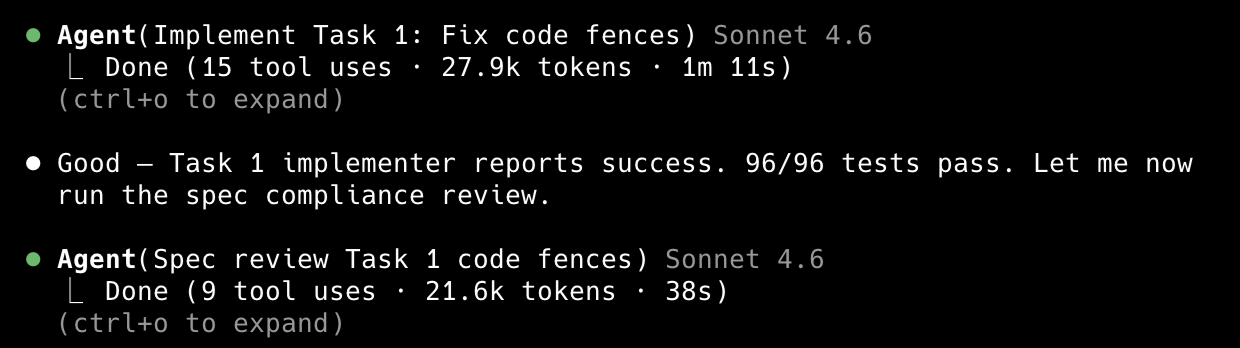
pre_tool_use.py (PreToolUse on Agent/Task) enforces sub-agent routing at spawn time. Generic spawns are rewritten to the matching routed-* agent variant, custom agent types get a model-only recommendation, and an explicit model set by the caller is always respected. Controlled by subagent_enforcement (on | advisory | off, default on).
session_init.py (SessionStart) injects the task-class rules below into every session so you and your sub-agents share one routing table.
Routing model
Routing is effort-first: the classifier picks an effort level, then the model that fits it. effort_warn_distance damps borderline cases so a prompt near a class boundary warns rather than flipping the model. The classifier is heuristics-first (keyword and pattern matching) with an optional headless claude -p --model haiku fallback for ambiguous prompts. The fallback needs no API key (it uses your Claude Code auth), caches results by prompt hash in the plugin data dir, and can be disabled with classifier.cli_fallback: false. Everything fails open: any error passes the prompt through unmodified.
Model Tier Rules
These rules apply to YOU and to every sub-agent you spawn.
Task classes and default targets
| Class | Target model | Effort | When to use |
|---|---|---|---|
| mechanical | haiku | none | Git ops, renames, formatting, lint, file moves, version bumps, quick lookups, short imperative tasks. |
| implementation | sonnet | medium | Writing or editing code, building features, creating components or APIs, writing tests, standard feature work. |
| debugging | sonnet | high | Diagnosing failures, flaky tests, races, regressions, stack traces, bisecting, reproducing bugs. |
| architecture | opus | high | Architecture decisions, tradeoff analysis, redesigns, deep multi-file analysis, sustained reasoning over large context. |
| extreme | fable | high | Multi-system migrations, codebase-wide rewrites, long-horizon plans, RFCs and design docs, platform-scale work. |
| abstain | (no routing) | - | Prompt does not clearly match any class; current model and effort pass through unmodified. |
Sub-agent model selection (MANDATORY)
When calling the Agent tool, set the model parameter to match the task class
above. Never default all sub-agents to opus. Match the model to the work:
mechanical work goes to haiku, standard coding to sonnet, deep analysis to
opus, and only platform-scale efforts to fable.
Installation
Plugin install (recommended)
claude plugin marketplace add tzachbon/claude-model-router-hook
claude plugin install claude-model-router-hook@claude-model-router-hook
Hooks are registered automatically. Restart Claude Code to activate.
Manual
git clone https://github.com/tzachbon/claude-model-router-hook.git
cd claude-model-router-hook
./install.sh
The plugin registers its SessionStart, UserPromptSubmit, and PreToolUse hooks through its bundled hooks.json; there is nothing to wire into settings.json by hand. Restart Claude Code to activate.
Override
Prefix any prompt with ~ or < to skip classification entirely and keep the current model active.
Configuration
Config lives in ~/.claude/model-router.json (global) and .claude/model-router.json inside a project (project wins), merged over built-in defaults. Both files are optional. The schema is v2; a v1 config is migrated in memory at load time and your files are never rewritten. Example:
{
  "version": 2,
  "apply_mode": "warn",
  "allow_fable_autoswitch": false,
  "subagent_enforcement": "on",
  "classifier": { "cli_fallback": true },
  "thresholds": { "effort_warn_distance": 2 }
}
Key knobs:
| Key | Default | Effect |
|---|---|---|
apply_mode |
warn |
warn advises only; autoswitch writes the recommended model to ~/.claude/settings.json for new sessions only, never the live one. |
allow_fable_autoswitch |
false |
Extra gate: even in autoswitch mode, routing up to fable only writes when this is on. |
subagent_enforcement |
on |
on rewrites/injects sub-agent routing in PreToolUse; advisory recommends only; off disables it. |
classifier.cli_fallback |
true |
Enables the optional headless claude -p --model haiku classifier fallback for ambiguous prompts. |
thresholds.effort_warn_distance |
2 |
Boundary damping: prompts within this effort distance of a class edge warn instead of switching. |
Log
Activity is written to ~/.claude/hooks/model-router-hook.log:
[2026-03-07 12:00:00] action=AUTOSWITCH->opus model=sonnet effort=medium klass=architecture target_effort=high prompt="evaluate the tradeoffs betwee..."
[2026-03-07 12:01:00] action=SUGGEST->sonnet model=haiku effort=none klass=implementation target_effort=medium prompt="build the settings panel comp..."
[2026-03-07 12:02:00] action=OVERRIDE prompt="~ keep opus for this one"
action= comes first, followed by any model / effort / klass / target_effort fields, then the truncated prompt snippet. AUTOSWITCH-> lines record a settings write (autoswitch mode); SUGGEST-> lines record a warn-mode advisory; OVERRIDE marks a bypassed prompt. A prompt that already matches its tier exits silently and writes no line.
Known limitations
- Multi-hook
updatedInputmerge order (A-3): when more than onePreToolUsehook returns anupdatedInputfor the same tool call, the order in which Claude Code merges them is undocumented platform behavior. The router writes its rewrite defensively, but a competing hook that also rewrites the spawn can win depending on merge order.
Credits
Based on model-matchmaker by @coyvalyss1.
Contributing
See CONTRIBUTING.md.
License
MIT. See LICENSE.
Yorumlar (0)
Yorum birakmak icin giris yap.
Yorum birakSonuc bulunamadi