claude-lane-stack
Health Gecti
- License — License: MIT
- Description — Repository has a description
- Active repo — Last push 0 days ago
- Community trust — 125 GitHub stars
Code Gecti
- Code scan — Scanned 12 files during light audit, no dangerous patterns found
Permissions Gecti
- Permissions — No dangerous permissions requested
Bu listing icin henuz AI raporu yok.
Multi-agent coding orchestration for Claude Code — AGY/Grok/Codex lanes, file contracts, auto-merge to main
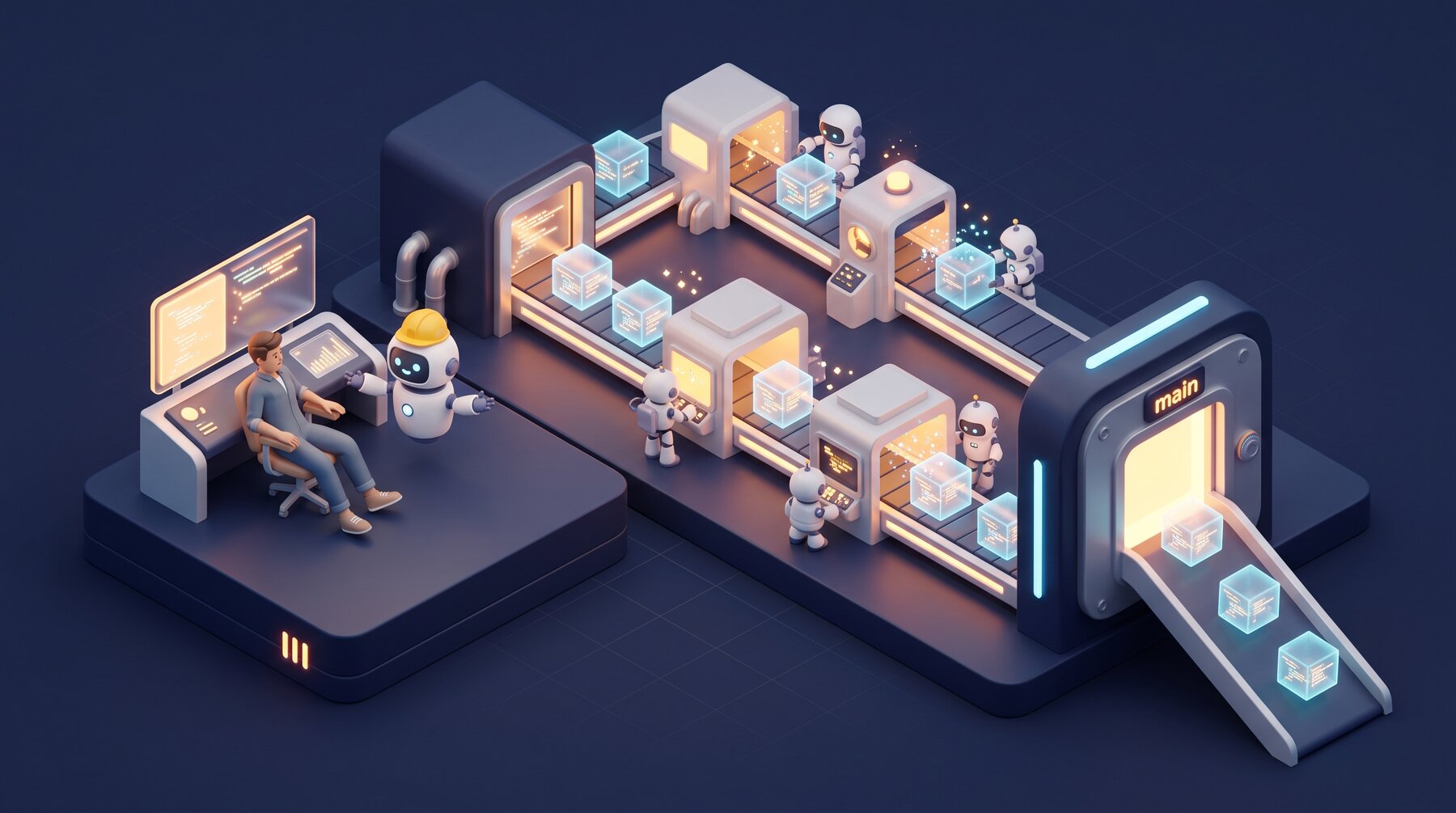
🏭 Claude Lane Stack
A small AI coding factory for one person · v1.3.1
Multi-agent orchestration for Claude Code — you talk to one AI project manager,
it dispatches optional workers (Grok / Codex), reviews their output
and merges finished code to main. No five chats. No manual merges.





🌍 README: Русский · 简体中文 · 日本語 · Español · Deutsch · Français · 한국어 · Português
🐣 Beginner guide: EN · RU · 中文 · 日本語 · ES · DE · FR · KO · PT
📌 Table of contents
- Why this exists · Who it's for · How it works
- Quick start · Onboard 2.0 · Lanes that finish · Progressive accept
- Task cards · You never merge
- Cheat sheet · Profiles · FAQ · Docs
💡 Why this exists
Working with AI coding tools usually looks like this: five chat windows, copy-pasted snippets, branches you merge by hand at midnight, and no one checking anyone's work.
Claude Lane Stack turns that into a conveyor:
| 😩 Five chats | 🏭 Lane Stack |
|---|---|
| You re-explain context to every model | One PM holds context, workers get task cards |
| Models overwrite each other's files | Each card lists owned paths — workers stay in their lane |
| Nobody reviews the AI's code | A dedicated review lane (Codex) gates every merge |
| You merge branches manually | The PM merges to main after checks pass |
| Next morning: "what were we doing?" | /resume-project — Now / Blocked / Next in seconds |
| Onboard is a thin CLAUDE stub | Deep forensic passport on mature repos |
| Long Grok runs die at ~2 min | lane-ctl + user-systemd — detached lifecycle survives host cleanup |
| Parallel tasks wait for the slowest | Event-driven accept — detached Grok + lifecycle events + separate verify pool |
No task database. No required cloud service. Plain files + plain git — everything is inspectable in your repo.
👥 Who it's for
- 🧑💻 Solo developers who want an agentic coding workflow — parallel AI agents without chat chaos
- 🚀 Indie hackers who'd rather describe features than babysit branches
- 🧠 Vibe-coders — you know what you want; the factory handles how
- 🏢 A one-person agency running several client repos with the same discipline
[!TIP]
Never heard the word "orchestration"? Start with the Beginner guide — it explains everything as a small factory, zero jargon.
🧩 How it works
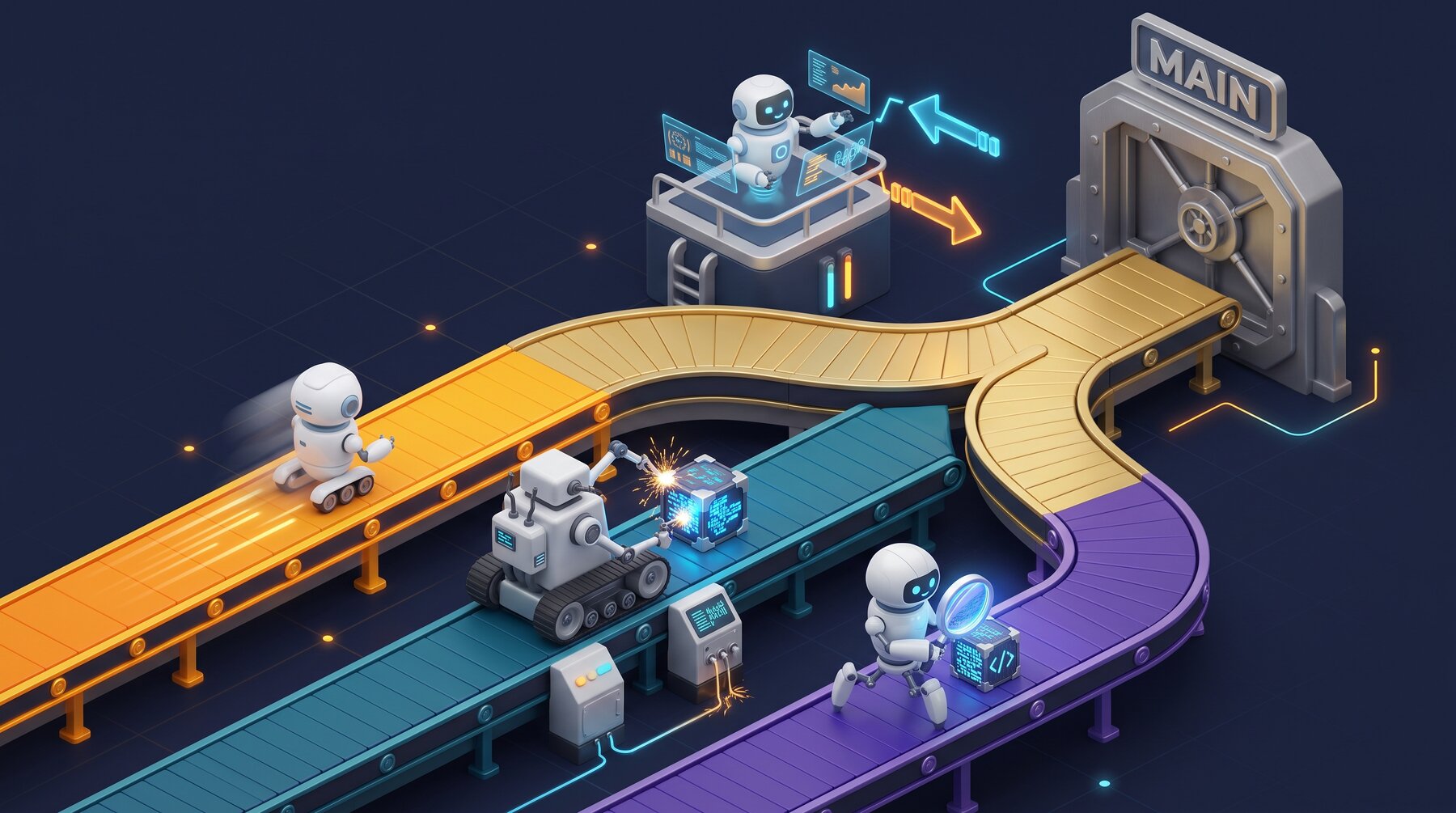
You talk to one agent — dev-orchestrator, the project manager. It routes work across lanes:
flowchart LR
    subgraph you ["🧑 You"]
        A["Plain language:<br/>«add dark mode»"]
    end
    subgraph pm ["🤖 PM — dev-orchestrator"]
        B["Plan → task cards<br/>.agents/runs/"]
    end
    subgraph lanes ["👷 Worker lanes (optional)"]
        D["🔧 Grok — heavy writes"]
        E["🔍 Codex — review gate"]
    end
    A --> B
    B --> C & D
    C & D --> E
    E -->|checks passed| F[("📦 main")]
    E -->|issues| B
| Role | Who | What they do |
|---|---|---|
| 👑 Owner | You | Say what you want (chat may be any language) |
| 🤖 Project manager | Claude Code agent dev-orchestrator |
Plans, dispatches, verifies, merges |
| ⚡🔧 Write lanes | , Grok (optional) | Implement task cards (detached via lane-bg) |
| 🔍 Review / write / onboard | Codex (optional) | Review gate, emergency write, project passport |
| 🗂️ Task cards | YAML in .agents/runs/ |
Factory floor — fully inspectable |
| 📦 Official code | Git branch main |
Where every successful job ends |
Language policy: durable files (contracts, CLAUDE, reports, docs) are English. Chat with the human may be Russian (or your language) — the PM translates. See docs/LANGUAGE.md.
Models (Codex): GPT-5.6 only — Sol (review / deep / high-risk), Terra (scoped write / docs), Luna (trivia only). No 5.5. See docs/ROUTING.md.
[!NOTE]
Only Claude Code is required. Missing workers are fine —agents-doctordetects what's installed and the PM adapts, down to pureclaude-onlymode.
🚀 Quick start (3 commands)
# 1️⃣  Install the stack — once per computer
git clone https://github.com/VKirill/claude-lane-stack.git
cd claude-lane-stack && git checkout v1.3.1 # or: main
./install.sh
export PATH="$HOME/.agents/bin:$PATH" # or open a new terminal

# 2️⃣  In YOUR project — detect available workers, once per repo
cd /path/to/your-project
agents-doctor --apply .

# 3️⃣  Start the PM and talk normally
claude --agent dev-orchestrator
Then in chat:
| Command | When |
|---|---|
/project-onboard |
First time on a repo — passport + docs (auto minimal/full + fast/deep) |
/project-onboard deep |
Force forensic analysis |
/resume-project |
Cold start after a break — Now / Blocked / Next |
[!IMPORTANT]
/resume-projectis a "welcome back" command — not an installation step.
📖 Walkthrough: docs/BEGINNER.md · Release notes: v1.3.1
🧭 Onboard 2.0 — scenario + depth
First-time setup is not a thin stub. project-onboard + Codex build a real passport.
Axis 1 — Scenario (what to seed)
| 🟢 minimal | 🟣 full | |
|---|---|---|
| When | score < 5 (small / greenfield) | score ≥ 5 or multi-package monorepo |
| Seeds | CLAUDE · AGENTS · ARCHITECTURE · memory · plans | + GOTCHAS · GLOSSARY · TESTING · deployment · nested apps/*/CLAUDE.md · SECURITY when domain-heavy |
Axis 2 — Depth (how hard Codex digs)
| ⚡ fast | 🔬 deep (default on full) | |
|---|---|---|
| Explore | top dirs + manifests | entrypoints, top modules, 3–7 flows, wiki↔code, run tests |
| Model | gpt-5.6-terra high |
gpt-5.6-sol high |
| Report | passport filled | MODULES_READ · FLOWS · WIKI_MISMATCHES · VERIFY |
project-onboard . # auto scenario + depth
project-onboard . --deep # force forensic
project-onboard . --minimal --fast
Writes:
.agents/onboard.scenario.yaml—scenario+depth+ score.agents/runs/_onboard/artifacts/001/deep-scan.md— evidence pack for Codex- Prefer pointers to existing wiki (
gotchas.md) over UPPERCASE duplicates
Full guide: docs/ONBOARD-SCENARIOS.md
🏃 Lanes that finish — background survival
Claude Code kills foreground Bash around ~2 minutes. That is a host limit, not lane-exec.
Long Grok jobs start through the typed control plane:
lane-ctl start --run-dir "$RUN_DIR" --task-file "$TASK_FILE" --project-cwd "$PROJECT_CWD"
lane-ctl status --run-dir "$RUN_DIR" --task-id "$TASK_ID" --json
lane-ctl verify --run-dir "$RUN_DIR" --task-file "$TASK_FILE" --project-cwd "$PROJECT_CWD"
| Tool | Role |
|---|---|
lane-ctl |
typed start/status/events/tail/retry/cancel/verify control plane |
lane-bg |
low-level transient user-systemd service; explicit nohup fallback |
lane-exec |
activity-aware idle + absolute max on the detached process |
lane-session |
resumes run-scoped Grok context; provider default 5/max 10 |
The read-only lane-supervisor and dev-orchestrator use this pattern. Verification has a separate default 2/max 10 pool. Details: docs/LANE-EXEC.md
Grok no longer relearns the repository on every task in a run. The first
task creates a conversation; later related tasks resume it. A busy conversation
is never shared concurrently—parallel tasks lease another slot (five by default,
configurable from one to ten).
Sessions rotate after seven successful tasks by default, on failure, or when the
worktree/model changes. Codex review stays independent and does not reuse writer
context.
⚡ Event-driven accept — no join-wait
Multi-task runs no longer wait for the slowest concurrent lane before accepting finished ones.
- Source-read-only
lane-supervisorcallslane-ctl startand returns immediately. - Detached
lane-bg → lane-exec → lane-session → grokowns process lifetime. - PM reacts to compact lifecycle events, then runs independent verification.
- Accept now and refill the next ready task (provider default 5/max 10).
Claude does not spend one live subagent per provider process. See docs/LANE-EXEC.md · skills/orchestrator-lanes.
📋 Task cards: how workers stay in their lane
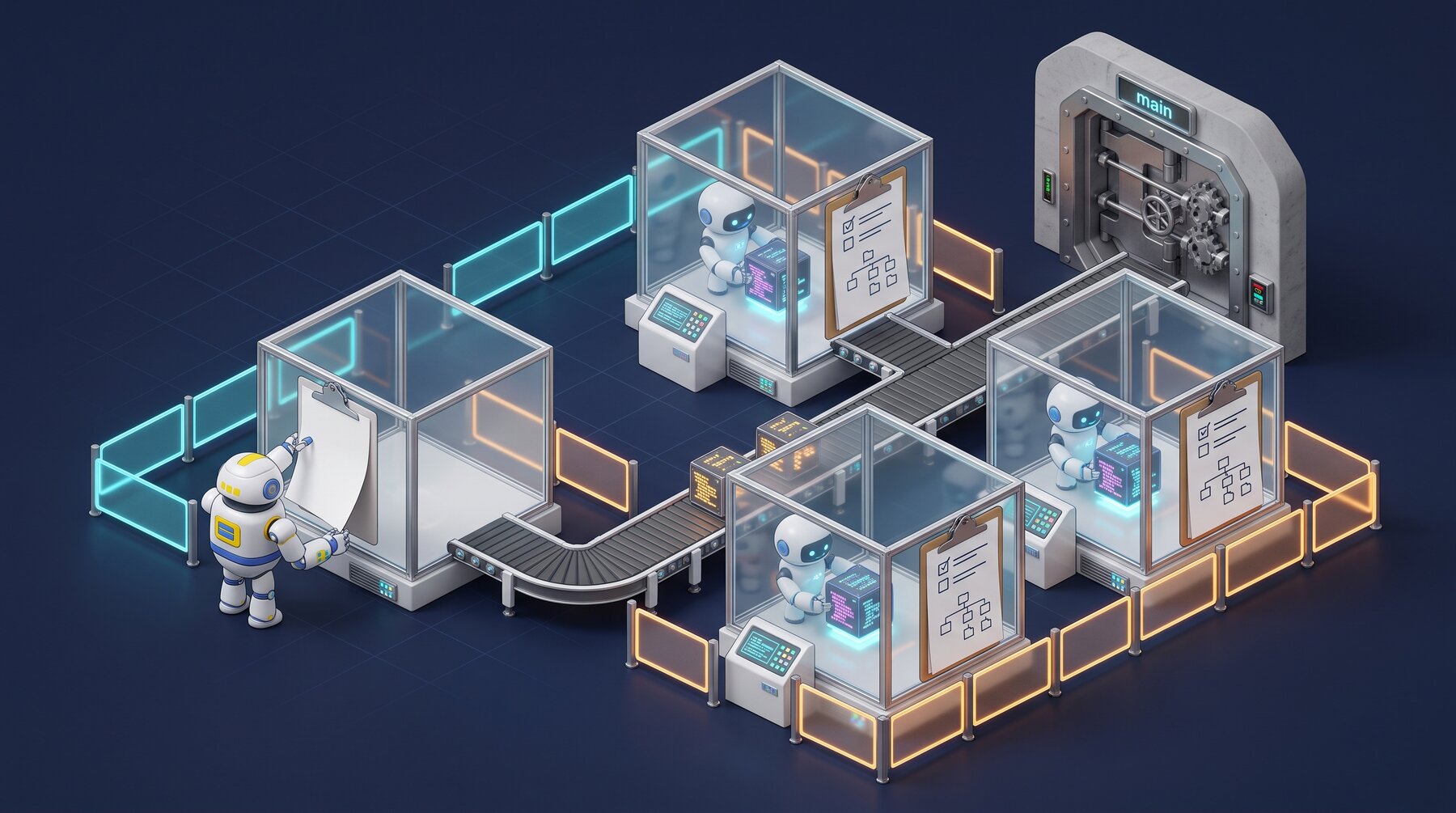
Every job is a small YAML contract in .agents/runs/ — created by the PM, obeyed by workers (English):
task: add-dark-mode
goal: Dark theme toggle on the settings page
owns_paths: # 🔒 the ONLY files this worker may touch
  - src/settings/**
  - src/theme.css
verify:
  - npm test
  - npm run lint
lane: grok             # only write programmer
review: codex-reviewer # who gates the merge
- 🔒
owns_paths— parallel workers can't collide:check-owns-pathsfails the task if a worker strays - ✅
verify— merge is blocked until checks pass - 📜 Cards stay in git history — audit trail of what every agent did
Details: docs/FILE-CONTRACT.md
📦 You never merge — the PM does
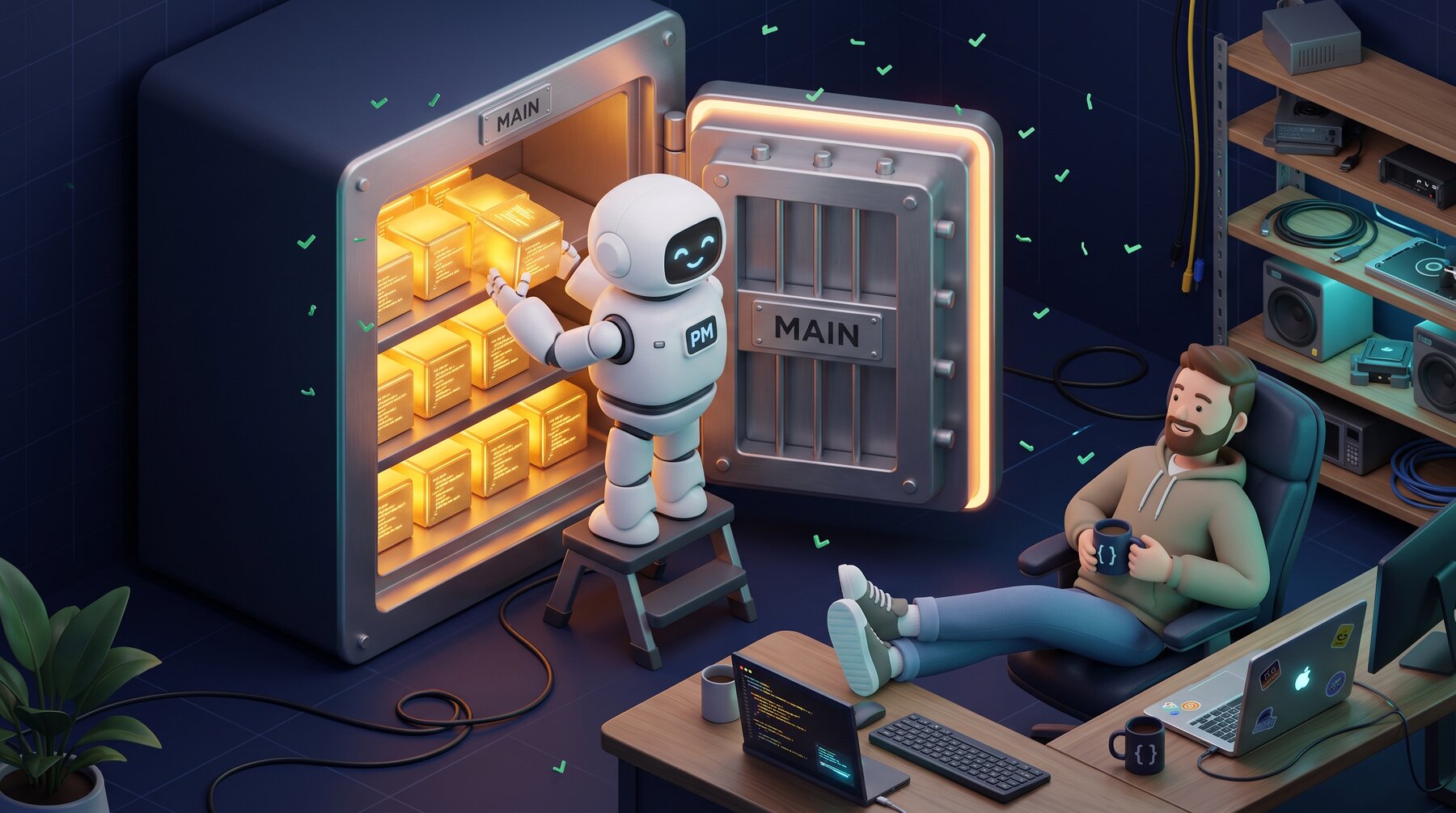
The end of every successful job is the same: verified code lands on main, merged by the orchestrator via wt-merge-main after review and checks. Workers build in isolated git worktrees.
[!WARNING]
If an agent ever asks you to resolve branches — that's a bug in the flow. Tell the PM: «merging is your job».
Rules: docs/SOLO-ORCHESTRATION.md
🧾 Commands cheat-sheet
You type these
| Command / phrase | What it is | When |
|---|---|---|
./install.sh |
Install kit into ~/.agents |
Once per computer |
agents-doctor --apply . |
Detect CLIs → routing profile | Once per project |
claude --agent dev-orchestrator |
The only chat you need | Every session |
/project-onboard |
Passport via Codex (scenario + depth auto) | First time on a repo |
/project-onboard deep |
Force forensic onboard | Mature / messy repos |
| «Add dark mode…» | Work request — any language | Features & fixes |
/resume-project |
Now / Blocked / Next | After a break |
| «It's stuck» | PM checks silent workers | Long silence |
| Command | What it is |
|---|---|
run-board |
Job scoreboard |
lane-session status --run-dir .agents/runs/<slug> |
Inspect that run's Grok session pool |
wt-create / wt-merge-main |
Worktree + merge into main |
check-owns-paths |
Did the worker stay in its file list? |
lane-ctl |
Typed detached lifecycle control + independent verify |
lane-bg / lane-exec / lane-session |
Low-level process lifetime, activity timeouts, and warm provider pool |
lane-heartbeat / lane-stall-check |
Alive? Silent? |
project-onboard |
Shell seed + deep-scan (Codex fills) |
docs-maintain-project |
Nightly/daily docs honesty |
project-memory-init |
PROGRESS / LESSONS |
night-audit |
Housekeeping |
🚦 Capability profiles
agents-doctor writes one of five profiles:
| Profile | You have | Write lane | Review lane |
|---|---|---|---|
full |
Grok + Codex | Grok | Codex Sol |
claude- |
Claude | ||
claude-grok |
Grok | Grok | Claude |
claude-codex |
Codex | Codex Terra/Sol | Codex Sol |
claude-only |
Claude Code only | Claude subagents | Claude subagents |
agents-doctor # report
agents-doctor --apply . # save into project
More: profiles/README.md · docs/ROUTING.md
🧱 What's in the box
claude-lane-stack/
├── agents/ # claude PM + grok/codex lanes (implementers, onboard, review)
├── bin/ # agents-doctor, project-onboard, lane-ctl, lane-bg, lane-exec, lane-session,
│ # wt-*, run-board, docs-maintain-*, …
├── skills/ # orchestration, contracts, memory, onboard,, …
├── profiles/ # full → claude-only
├── hooks/ # shell guard, code-quality, session ledger
├── templates/ # ARCHITECTURE, GOTCHAS, TESTING, deployment, README anamnesis, …
├── docs/ # beginner + deep dives (table below)
└── install.sh # → ~/.agents
Inside your project after onboard:
your-app/
├── CLAUDE.md # always-on rules (≤200 lines body)
├── AGENTS.md # pointer → CLAUDE.md
├── PROGRESS.md / LESSONS.md # living memory
├── .agents/
│ ├── onboard.scenario.yaml # scenario + depth + score
│ ├── routing.profile.yaml # agents-doctor
│ └── runs/ # 🏭 factory floor
└── docs/ # architecture, gotchas, deployment, plans/…
❓ FAQ
Do I need, Grok and Codex all installed?No — only Claude Code is required. Everything else is optional. agents-doctor adapts down to claude-only.
Plain Claude is one worker in one chat. Lane Stack adds management: task cards with ownership, multi-vendor lanes, independent review, auto-merge to main, deep onboard, cold-start recovery.
Usually no. Claude kills foreground Bash and may reap ordinary nohup descendants. Current runs start through lane-ctl, while lane-bg uses a transient user-systemd service. See docs/LANE-EXEC.md. After upgrading, start a fresh dev-orchestrator session.
Usually nothing — auto. Toy repo → minimal + fast. Mature monorepo → full + deep. Override with /project-onboard deep or project-onboard . --full --deep.
No. State is files in your repo (.agents/runs/) + git.
Yes. agents-doctor --apply . then /project-onboard. Existing wiki pages are linked, not blindly duplicated (gotchas.md wins over GOTCHAS.md).
Each CLI talks only to its own vendor. No extra servers. Don't put secrets in task YAML; use the review lane for auth/pay. SECURITY.md.
📚 Documentation map
| Topic | Doc |
|---|---|
| 🐣 Plain-language walkthrough | docs/BEGINNER.md |
| 🧭 Onboard scenarios + depth | docs/ONBOARD-SCENARIOS.md |
| ⏱️ Lane timeouts + background | docs/LANE-EXEC.md |
| 🌐 Language policy (EN files / RU chat) | docs/LANGUAGE.md |
| 🔀 Who writes / who reviews (Sol/Terra) | docs/ROUTING.md |
| ⚖️ Comparison with alternatives | docs/COMPARISON.md |
| 🧑✈️ Solo rules — you never merge | docs/SOLO-ORCHESTRATION.md |
| 🗂️ Task card YAML | docs/FILE-CONTRACT.md |
| 🛡️ Safety hooks | docs/HOOKS.md |
| 🧠 Project memory | docs/PROJECT-MEMORY.md |
| 📝 Ideas backlog | docs/TODOS.md |
| 🔌 MCP (lean / hybrid) | docs/MCP-LEAN.md · docs/MCP-HYBRID.md |
| 📰 Changelog | CHANGELOG.md |
| 🚀 Release v1.3.1 | GitHub Releases |
| 🤝 Contributing | CONTRIBUTING.md |
| 🔐 Security | SECURITY.md |
📜 License
MIT — LICENSE. Use it, fork it, build your own factory.

Кирилл Вечкасов · @VKirill · Telegram: Помогающий маркетолог
I build working conveyors, not another chat with an LLM.
⭐ If the conveyor idea clicks — star the repo. It helps solo builders find it.
Yorumlar (0)
Yorum birakmak icin giris yap.
Yorum birakSonuc bulunamadi