claudebox
Health Uyari
- No license — Repository has no license file
- Description — Repository has a description
- Active repo — Last push 0 days ago
- Low visibility — Only 5 GitHub stars
Code Basarisiz
- rm -rf — Recursive force deletion command in scripts/smoke.sh
Permissions Gecti
- Permissions — No dangerous permissions requested
Bu listing icin henuz AI raporu yok.
Claude on the Cloud, accessible via official Claude mobile app, anywhere, anytime.

ClaudeBox
Your own Claude Code agent, always on, reachable from your phone.
A box in the cloud runs Claude Code sessions you can open from the Claude app —
no laptop required, nothing to keep awake.
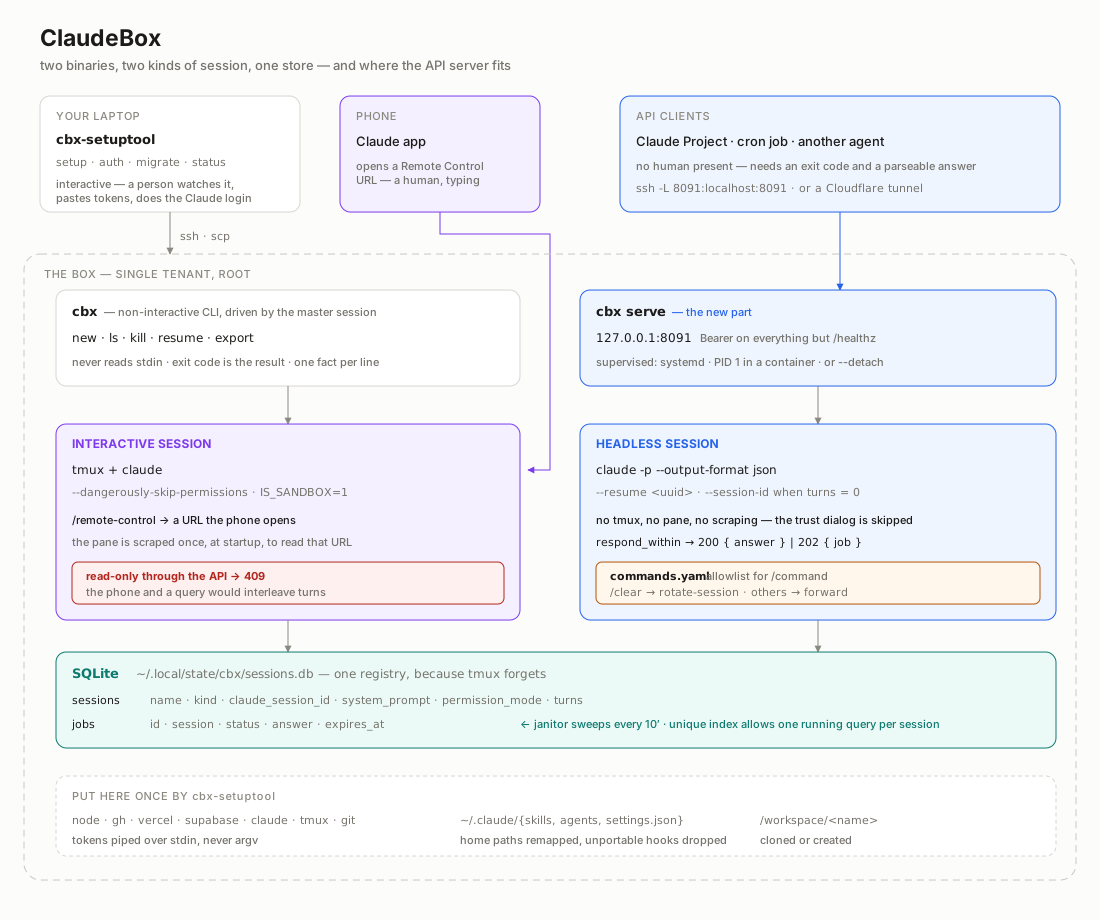
Two commands
ClaudeBox is two binaries because it does two unrelated jobs.
cbx-setuptool runs on your laptop and prepares a machine. Interactive: it
shows progress, asks for tokens, and hands you the Claude sign-in.
cbx runs on the box and manages sessions. Non-interactive: it never
prompts, never reads stdin, and prints one tab-separated fact per line, because
its caller is the Claude session itself.
See docs/two-binaries.md for why.
Getting started
Create an Ubuntu machine with your SSH key on it — a DigitalOcean droplet, or
anything you can ssh root@ into. Then, from your laptop:
GOOS=linux GOARCH=amd64 go build -o cbx-linux ./cmd/cbx
go build -o cbx-setuptool ./cmd/cbx-setuptool

./cbx-setuptool setup --host <ip> --binary ./cbx-linux
That installs the tool chain, puts cbx on the box, signs Claude Code in,
authenticates gh/vercel/supabase from tokens, and copies your skills and
settings across. Each step is skipped if already done, so re-running after a
failure is cheap.
Then start the always-on session and open its URL on your phone:
ssh root@<ip> cbx new master
cbx — on the box
cbx new <name> [--repo owner/repo]   start a session, print its Remote Control URL
cbx ls                                every session, and whether it is running
cbx resume <name>                     a running session's URL and attach command
cbx kill <name>                       stop it and forget it
cbx export skills|rules|db            what this box has, to stdout
Sessions are recorded in SQLite, so a session that dies is reported stopped
rather than vanishing, and a Remote Control URL survives a tmux restart.
cbx-setuptool — on your laptop
cbx-setuptool setup   --host <ip> --binary <linux-cbx>   the whole flow
cbx-setuptool auth    --host <ip> [github|vercel|supabase]
cbx-setuptool migrate --host <ip> [--claude-dir <dir>] [--filter a,b]
cbx-setuptool status  --host <ip>    what is installed and authenticated
Tokens are piped over SSH into each tool's own login rather than passed as
arguments, where they would be visible in the box's process table. A token
already in your environment (GH_TOKEN, VERCEL_TOKEN,SUPABASE_ACCESS_TOKEN) is used without asking.
migrate copies the parts of a Claude configuration directory that shape a
session — by default skills, agents, rules, settings.json and the
plugin manifest. --claude-dir picks which directory to copy from, and--filter picks what inside it travels, so neither is fixed.
settings.json is rewritten on the way: paths under your home directory are
remapped, and hooks calling binaries the box does not have are dropped and
reported. Copied verbatim they would fail on every edit inside every session.
Each entry is reported with the number of files it actually sent, because a
directory of symlinks into a dotfiles repository once migrated as empty and
was reported as copied.
Testing
go test ./...              # unit and integration, drives real tmux and SQLite
scripts/smoke.sh --create  # provision a real droplet, drive it, destroy it
cbx has no remote dependency, so it is fully testable on a laptop. The smoke
test exists because fakes cannot model a shell, a PATH, an installer that exits
0 having done nothing, or Claude asking to trust a folder — every serious bug in
this project was found by running against a real box.
Docs
- docs/two-binaries.md — why the split
- docs/api-server.md — the API server, and why it is not
cbx servereturning - docs/decision-log.md — choices made, why, and what would make each wrong
Yorumlar (0)
Yorum birakmak icin giris yap.
Yorum birakSonuc bulunamadi