core
Health Gecti
- License — License: AGPL-3.0
- Description — Repository has a description
- Active repo — Last push 0 days ago
- Community trust — 406 GitHub stars
Code Gecti
- Code scan — Scanned 12 files during light audit, no dangerous patterns found
Permissions Gecti
- Permissions — No dangerous permissions requested
Bu listing icin henuz AI raporu yok.
Self-hosted, open-source work management platform and Jira alternative (AGPL v3).






Windshift is an open-source, self-hosted work management platform and a Jira alternative, licensed under AGPL v3. It runs as a single Go binary with the Svelte frontend built in, using embedded SQLite by default or PostgreSQL, and ships as an official Docker image and a desktop app. See windshift.sh and the documentation.
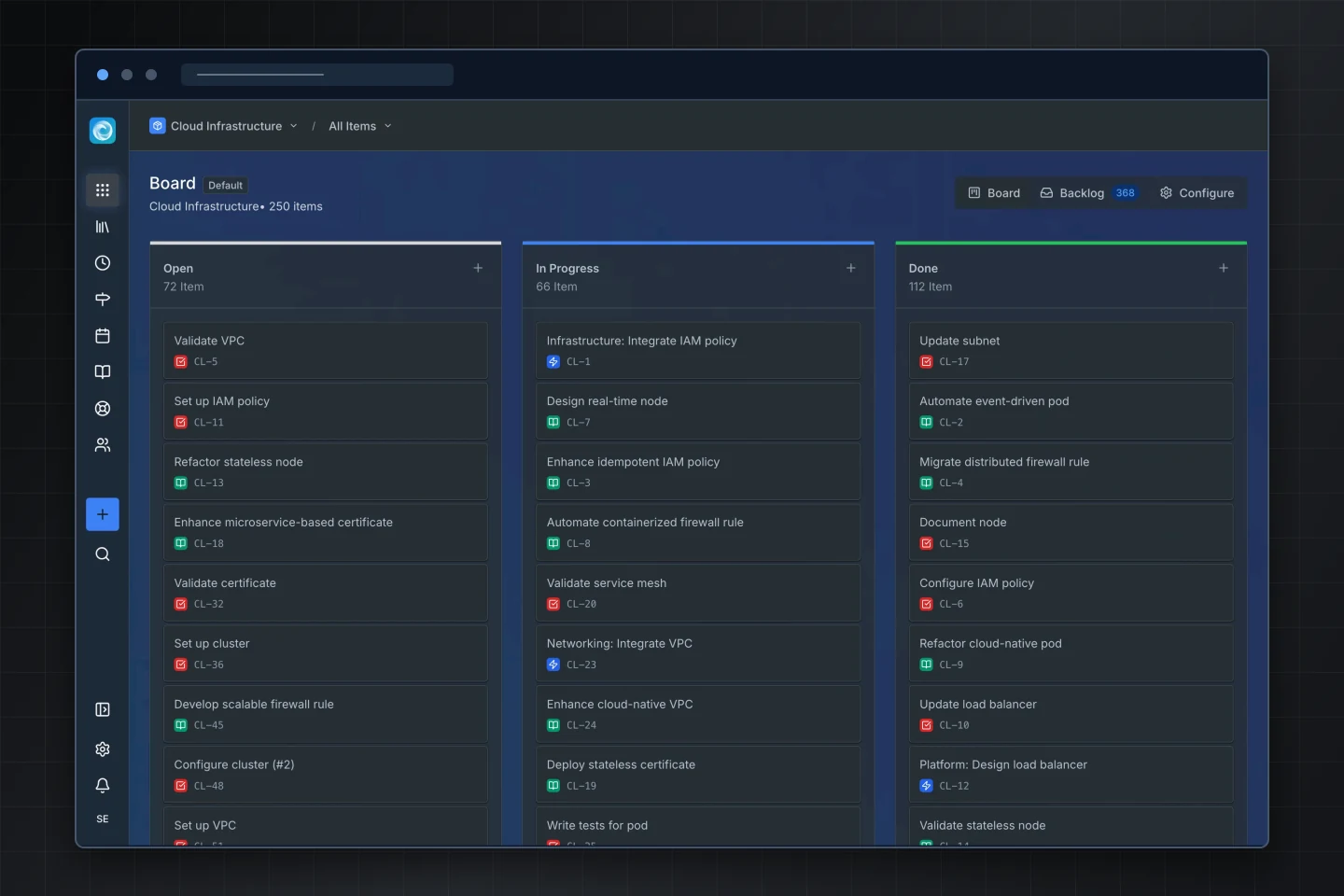
What Windshift is
Windshift is a work management platform for teams who want Jira's depth without Jira's weight.
It covers the core of what Jira does: projects, epics, stories, sub-tasks, sprints and backlogs, boards, roadmaps, custom workflows, custom fields, screens, permissions, automation, and dashboards. Filtering and saved searches use Windshift Query Language, a JQL-style query language.
It also replaces the add-ons and adjacent tools you would otherwise stitch together: service management with SLAs and a customer portal, a knowledge base, test management, time tracking, and an asset/CMDB register.
A built-in importer handles the move off Jira.
It ships as a single Go binary with the Svelte frontend built in, SQLite by default or PostgreSQL for data storage. No Java, no Elasticsearch cluster, no per-user pricing, and your data stays on your infrastructure.
Agents and automation
Windshift runs coding agents against your repositories. Agent Studio binds an agent to a workspace, launches it from a work item, and links the resulting pull request back to that item. Source control integrations cover GitHub, GitLab, Gitea, and Forgejo.
The built-in MCP server exposes work items, comments, pages, knowledge, tests, time tracking, and actions over the Model Context Protocol, with OAuth so agents and assistants authenticate as a real user and inherit that user's permissions.
Highlights
- Plan Jira-style without the Jira footprint: boards, backlogs, sprints, epics and sub-tasks, hierarchy trees, roadmaps, and dashboards.
- Configure each workspace on its own: item types, custom fields, screens, statuses, workflows, priorities, and permissions.
- Filter with a JQL-style query language and save the results as shared views.
- Automate the busywork with event-driven rules that update fields, notify people, and create work.
- Serve customers with SLAs, queues, approvals, and a public request portal.
- Connect GitHub, GitLab, Gitea, and Forgejo, import Jira projects, and send email or webhook notifications.
- Extend it with test management, time tracking, a knowledge base, or an asset register.
Coming from Jira
| Jira | Windshift |
|---|---|
| Projects | Workspaces and collections |
| Issues, epics, sub-tasks | Work items with configurable hierarchy levels |
| Boards, backlogs, sprints | Board and backlog views with iterations |
| Custom fields and screens | Custom fields and screens |
| Workflows and statuses | Workflow builder with conditions and approvals |
| JQL and saved filters | Windshift Query Language and saved collections |
| Jira Automation | Built-in event-driven actions |
| Jira Service Management | SLAs, queues, approvals, and a customer portal |
| Jira Assets / Insight | Asset and CMDB register |
| Xray / Zephyr | Test cases, test sets, test runs, and reports |
| Marketplace apps | Built-in modules, packs, and plugins (extensible via WASM runtime) |
Planning and tracking
- Workspaces, collections, and configurable hierarchy levels: epics, stories, sub-tasks, and custom item types.
- Boards, backlogs, sprints and iterations, roadmaps, milestones, dashboards, and hierarchy tree views.
- Custom fields, screens, statuses, workflows, priorities, and per-workspace permissions.
- Windshift Query Language (JQL-style) filters, saved collections, and links between work items.
Service management
- Service level agreements, queues, approvals, and a public customer request portal.
- Request types and SLA reporting.
Test management
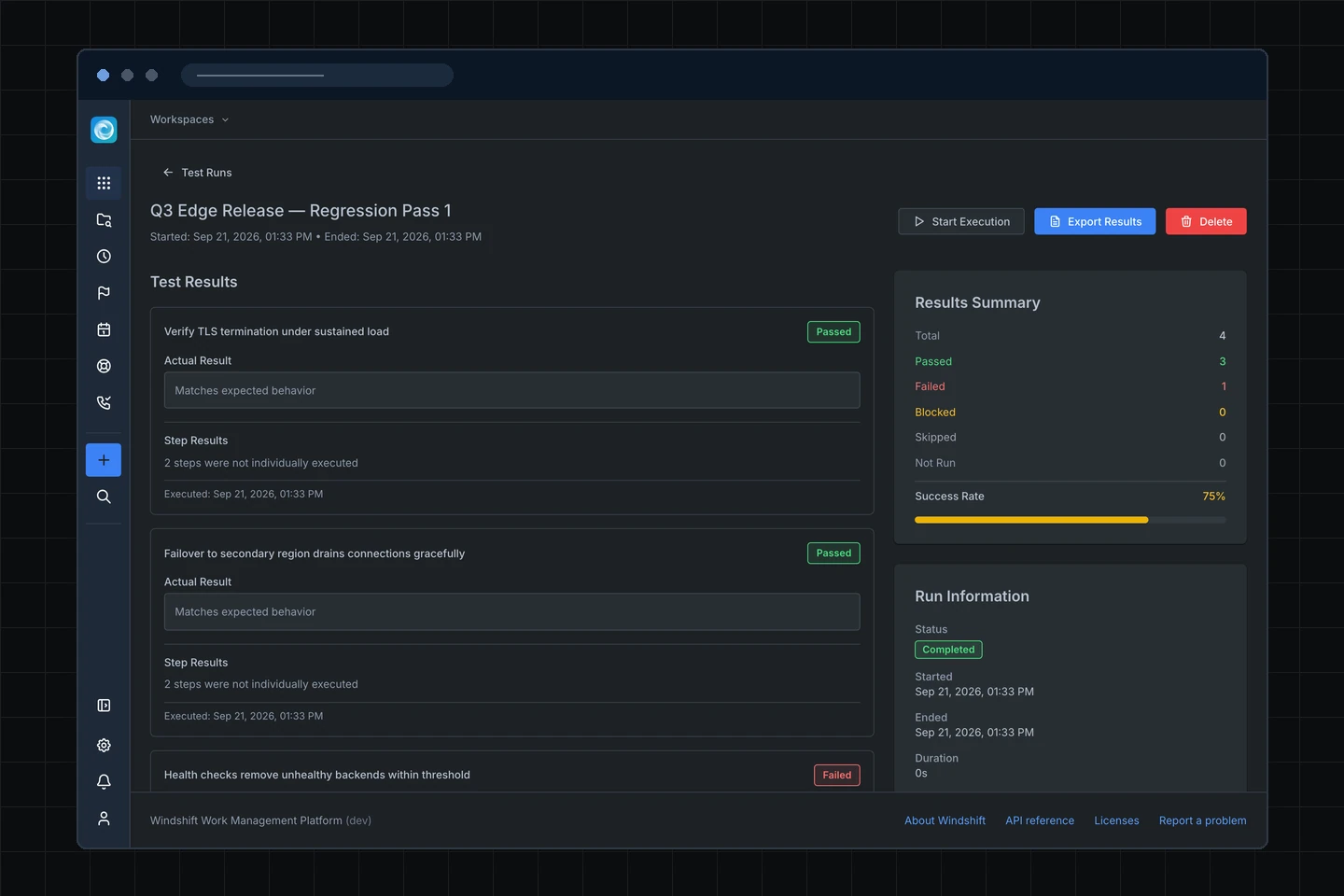
- Test cases, test sets, test runs, per-case results, and release reports.
Time tracking
- Time projects, worklogs, timers, and reporting.
Knowledge base
- Pages with revisions, permissions, diagrams, and search.
Assets and CMDB
- Asset sets, asset types, custom fields, and reports.
Automation
- Event-driven rules that update fields, notify people, and create work.
- Actions with conditions, templates, and validation.
Integrations and API
- GitHub, GitLab, Gitea, and Forgejo source control with pull request linking.
- Jira importer, email and webhook notifications, SMTP/IMAP, LDAP, and OIDC single sign-on.
- MCP server with OAuth, REST API v2, and a WASM plugin runtime.
Internationalization
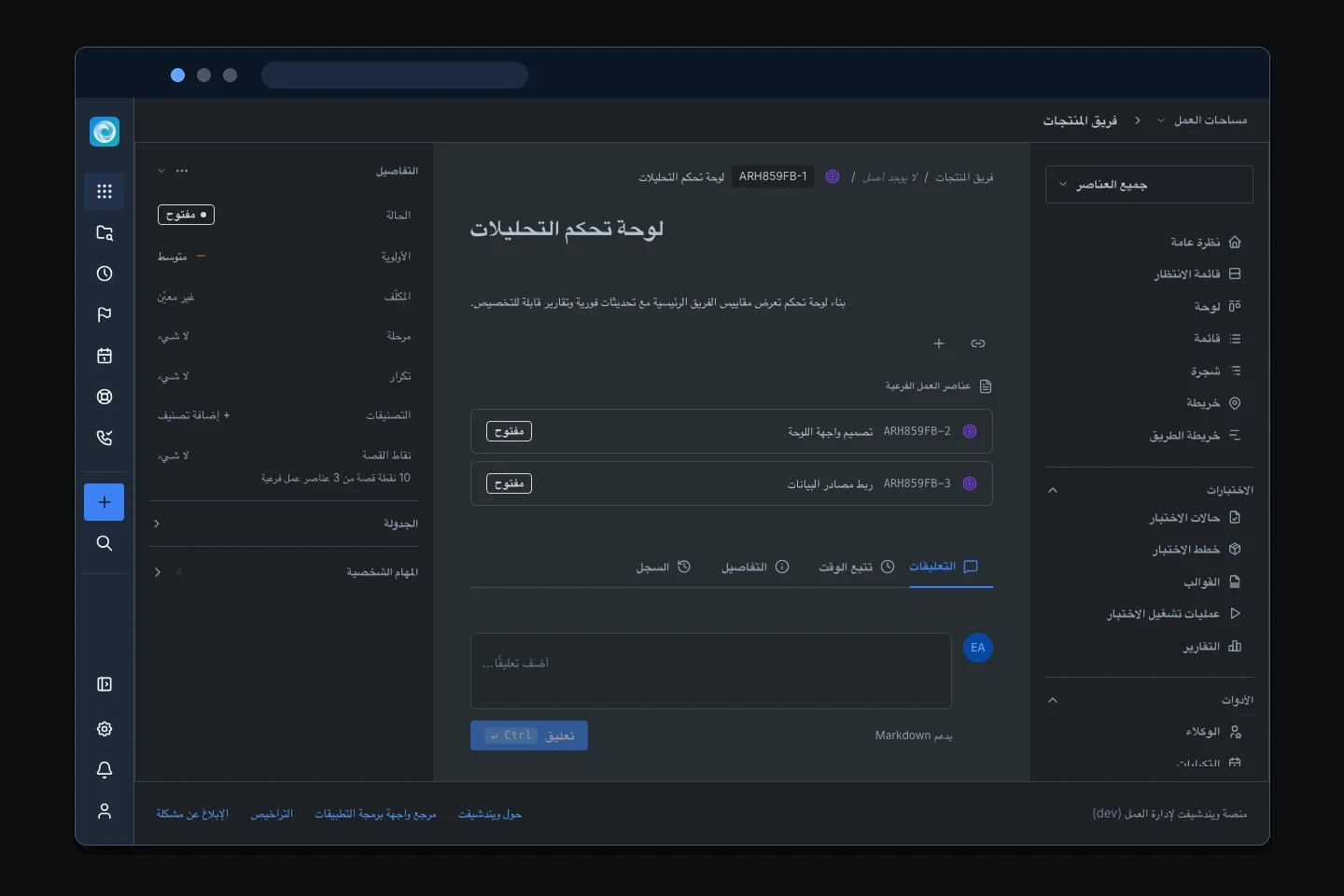
- Ten built-in languages: English, Deutsch, Español, Français, Italiano, Português (Brasil), العربية, Русский, 简体中文, and 한국어, with right-to-left support for Arabic.
Take a look
Plan sprints on the backlog
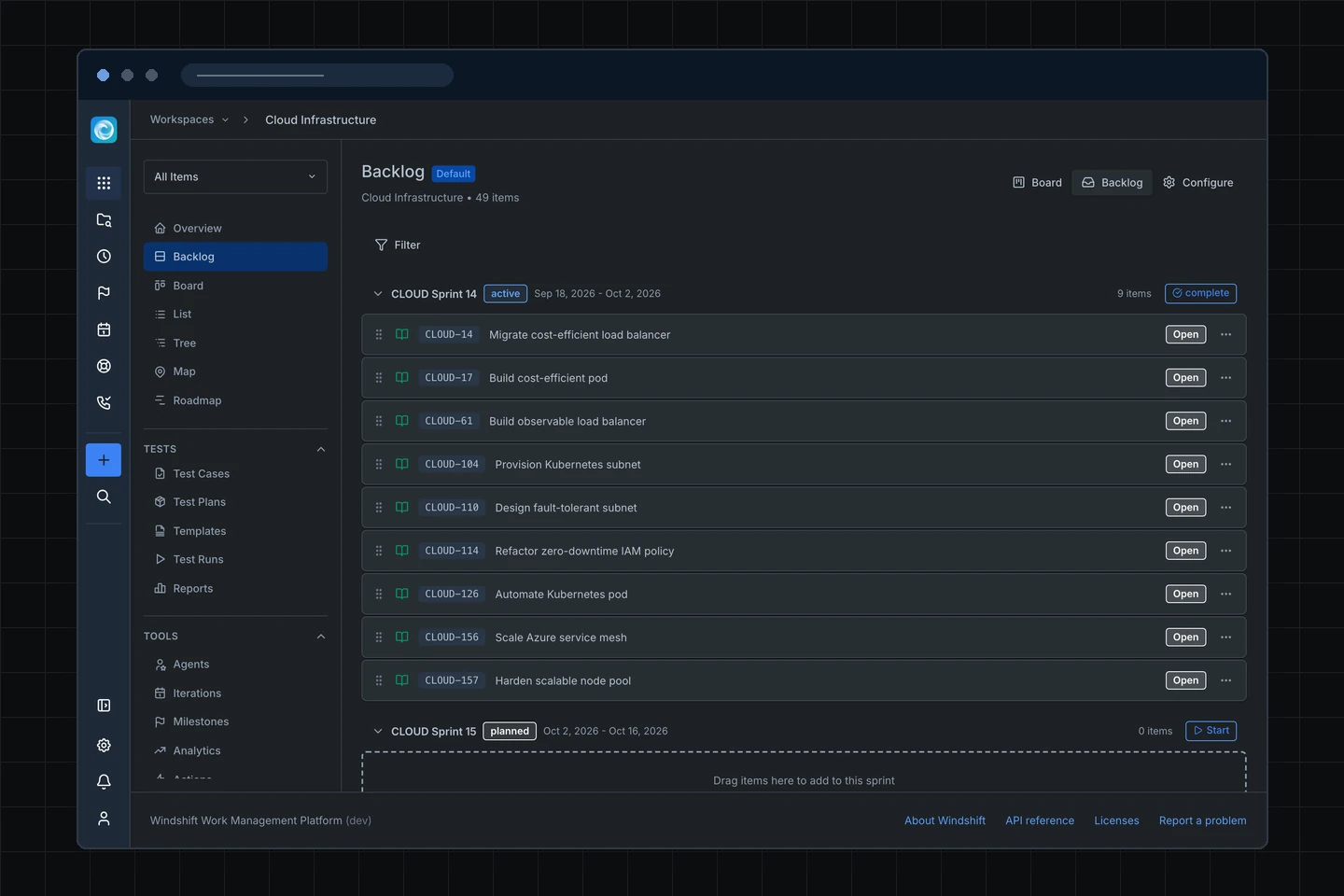
See every level of the work
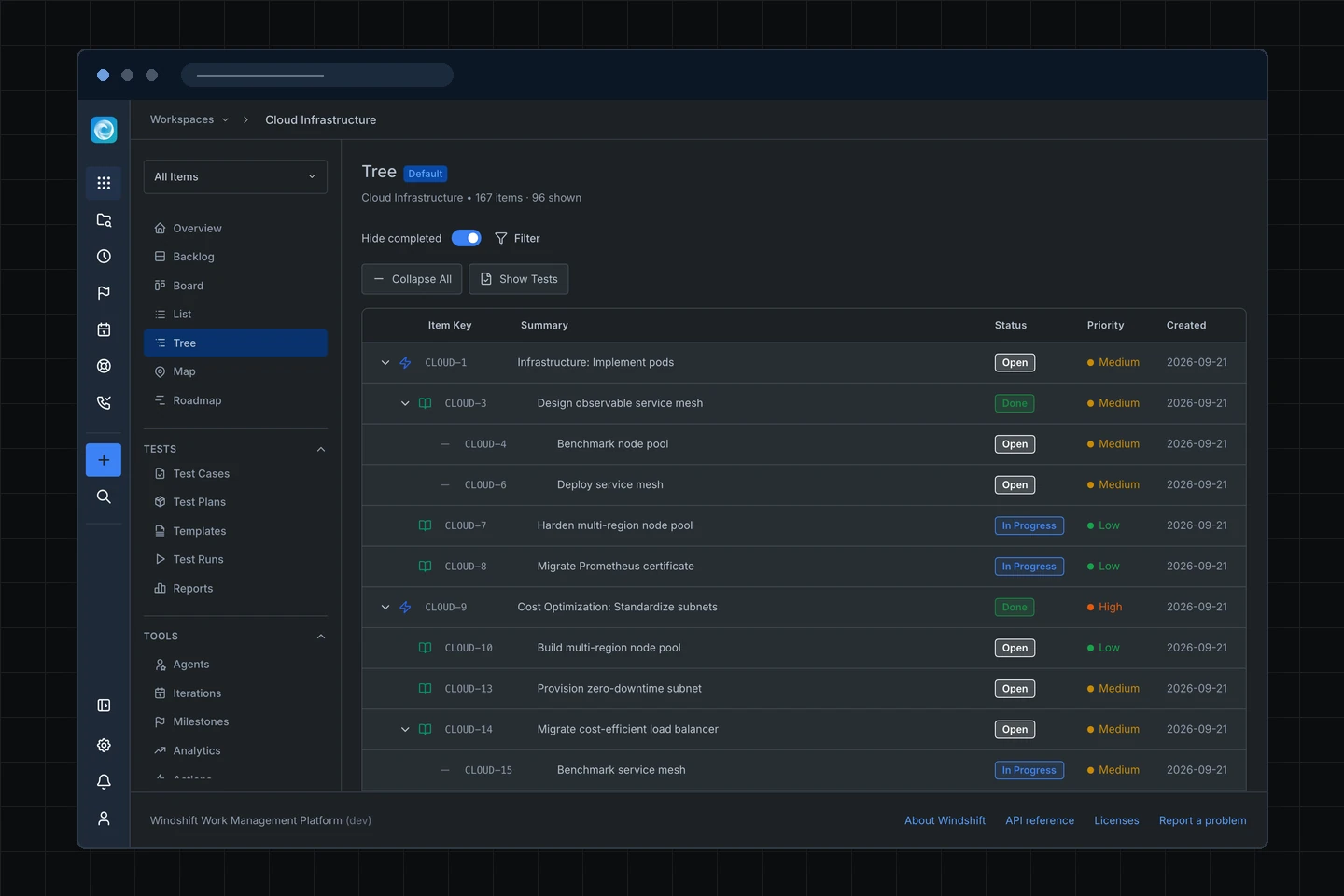
Track the timeline
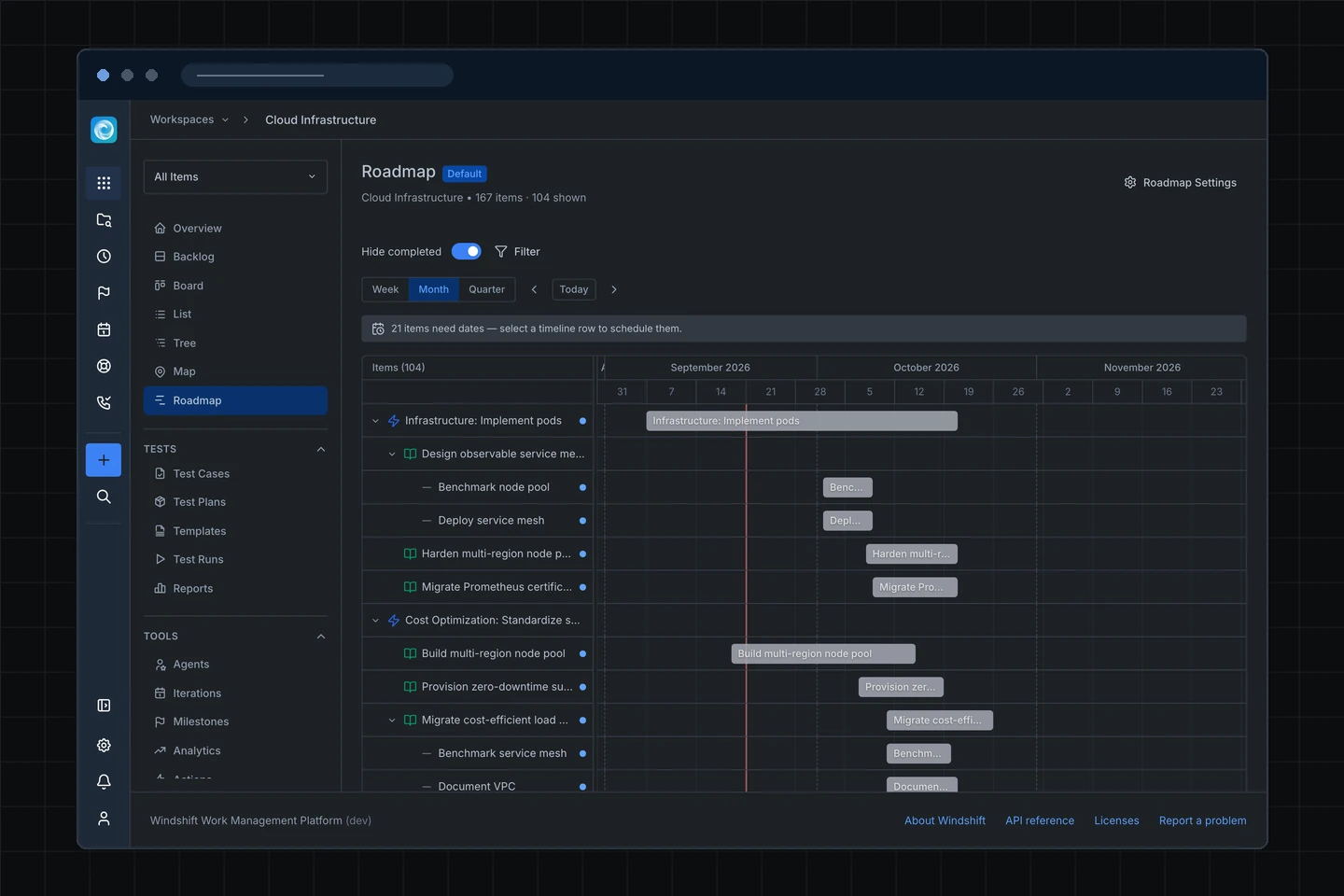
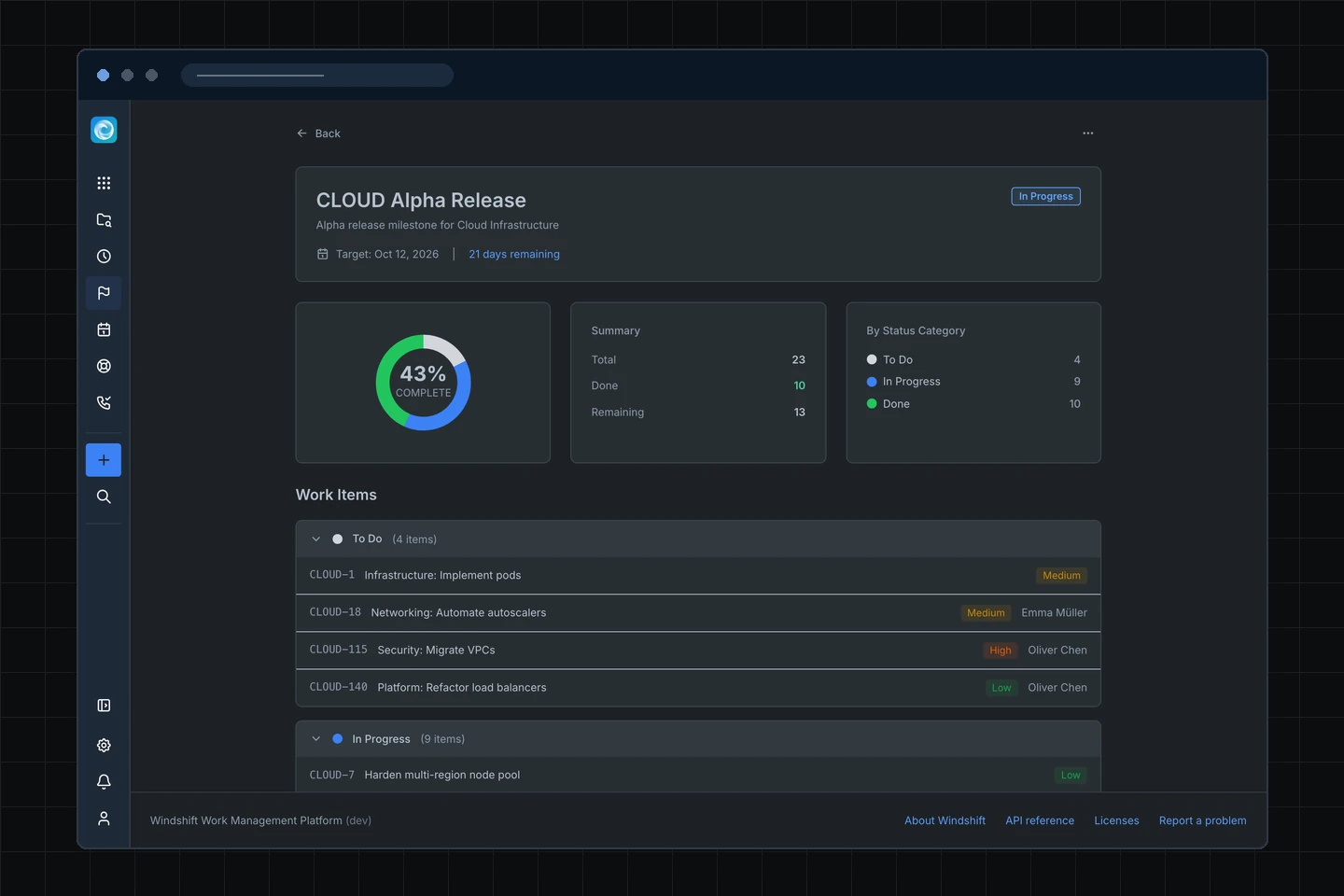
Measure milestone progress
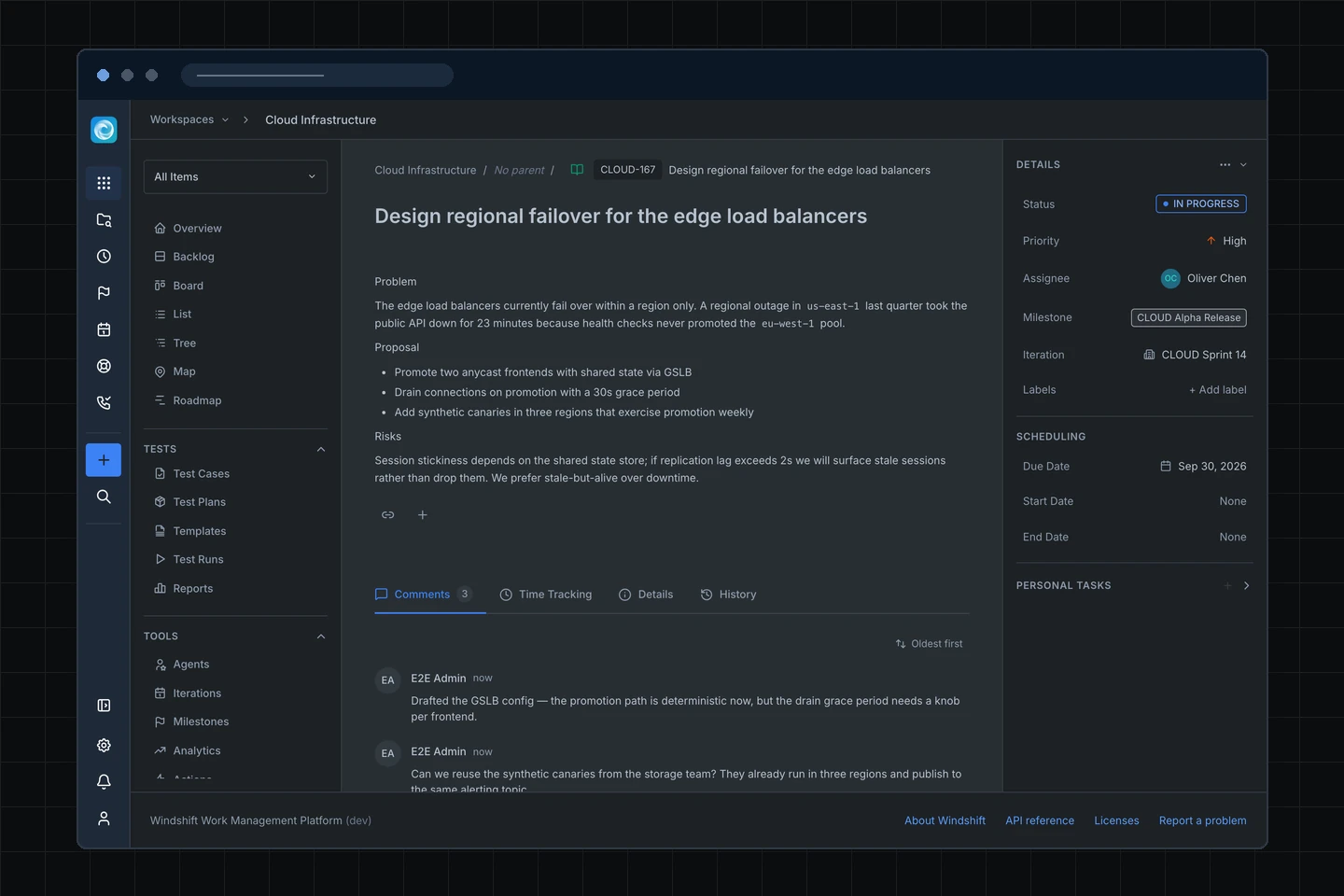
Keep context on the work
Verify releases with test runs
Language support
Available in many languages · Disponibile in molte lingue · متوفر بالعديد من اللغات · 支持多种语言
Доступно на многих языках · 다양한 언어로 사용 가능
Windshift ships with ten built-in languages: English, Deutsch, Español, Français, Italiano, Português (Brasil), العربية, Русский, 简体中文, and 한국어, including right-to-left support for Arabic.
Get started
Run the official Docker image:
docker run -d --name windshift -p 8080:8080 \
  -e SSO_SECRET="$(openssl rand -hex 32)" \
  -e BASE_URL=http://localhost:8080 \
  -v windshift-data:/data \
  ghcr.io/windshiftapp/windshift:latest
Then open http://localhost:8080. For a production setup, follow the Docker deployment guide or the quick start guide.
There is also a desktop app that connects to your server or runs locally. Get both from the download page. Windshift is designed to run comfortably on anything from a Raspberry Pi to a dedicated server.
Want to build from source? See BUILD.md. For local development and contribution guidelines, see CONTRIBUTING.md.
Contributing
Code contributions, bug reports, and feedback are all welcome here on GitHub. Open pull requests against main; use GitHub Issues and Discussions for bug reports and feedback. Contributions require a signed, one-time CLA; see the contributing guide for details.
If Windshift is useful to you, a star on GitHub helps other teams find it. Questions and ideas are welcome in GitHub Discussions.
Windshift supports OIDC single sign-on with any standards-compliant provider. We welcome feedback about the providers you connect.
Tech stack
- Backend: Go
- Frontend: Svelte, Vite, and Tailwind CSS
- Database: SQLite by default, with PostgreSQL 15+ support
Documentation
- Build instructions
- Contributing guide
- Logging configuration
- Docker backup and restore
- Kubernetes deployment
- Release notes and GitHub releases
- Product documentation
License
Windshift is available under the GNU Affero General Public License v3.0.
Yorumlar (0)
Yorum birakmak icin giris yap.
Yorum birakSonuc bulunamadi