antigravity-mission-control
Health Uyari
- License — License: MIT
- Description — Repository has a description
- Active repo — Last push 0 days ago
- Low visibility — Only 6 GitHub stars
Code Gecti
- Code scan — Scanned 12 files during light audit, no dangerous patterns found
Permissions Gecti
- Permissions — No dangerous permissions requested
Bu listing icin henuz AI raporu yok.
Policy-aware AGY orchestration, signed approvals, reliable jobs, and live quota for Codex and Claude Code.




Policy-aware orchestration for the Antigravity CLI (agy): route work to exact models, bind approvals to the task, serialize editing workers, verify cancellation, and watch live quota. Your coding agent (Codex or Claude Code) remains responsible for acceptance.
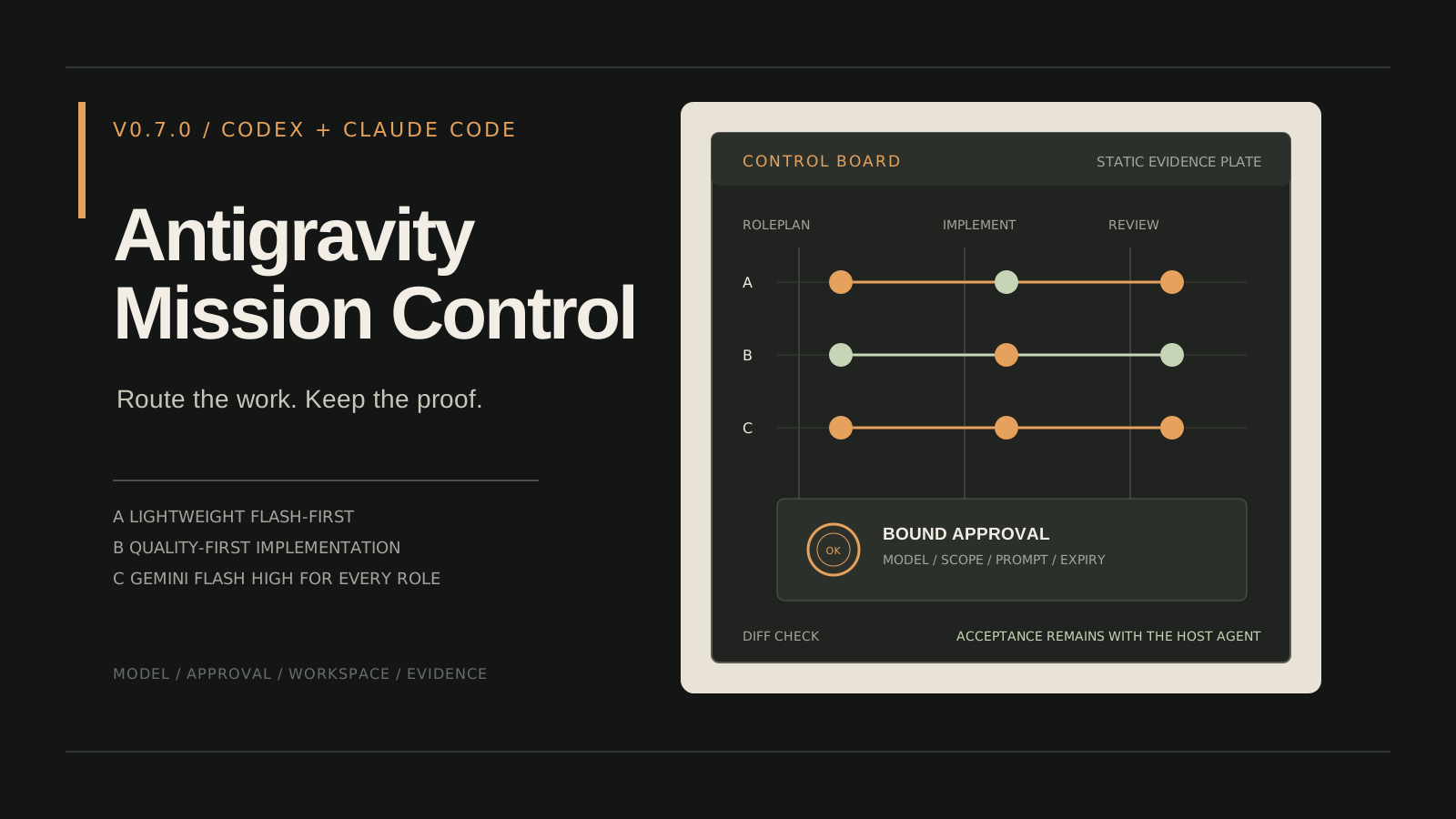
v0.7.0: Stable release that keeps long AGY turns from ending with no output. Default turn limits are 1800 s for an implementer and 1200 s for other roles instead of 600 s; a turn cut short by AGY's print timeout gets one no-tools wrap-up turn that returns the worker's report; a dropped model stream resumes the conversation once; failed results name a
failure_kind; and every dispatch asks the worker to read large files by line range. Routing and approvals are unchanged.Independent community project; not affiliated with Google or Antigravity.
Hand this page to your agent
Paste the block below into Codex, Claude Code or another coding agent. GitHub adds a copy button to the code block.
Open and read https://github.com/YuxiaoMa66/antigravity-mission-control before making changes.

1. Check whether `agy` is installed and signed in.
2. Show me the exact commands and target paths, then wait for my confirmation.
3. If AGY is ready, install the stable npm package with `npx antigravity-mission-control@latest install`; use `@0.7.0` when you need a pinned release. If AGY is missing, explain the official `--install-agy` option and ask for separate approval before using it.
4. Run `agy-mc doctor` and report the installed versions and paths.
5. Before delegating project work, show me the A/B/C roster choices with exact available model slugs and wait for my selection.

Treat workspace trust and unrestricted permissions as separate actions. Do not grant either one without my approval.

Keep yourself (the host agent) as the acceptance authority; AGY workers execute only within the approved scope.
The agent reads the same installation and security boundaries you see on this page, performs the checks, and reports the result. You do not need to translate the README into a chain of shell commands.
See the flight deck
These v0.7.0 illustrations show command excerpts and workflow summaries. Paths, IDs and quota values are examples, not live screenshots.
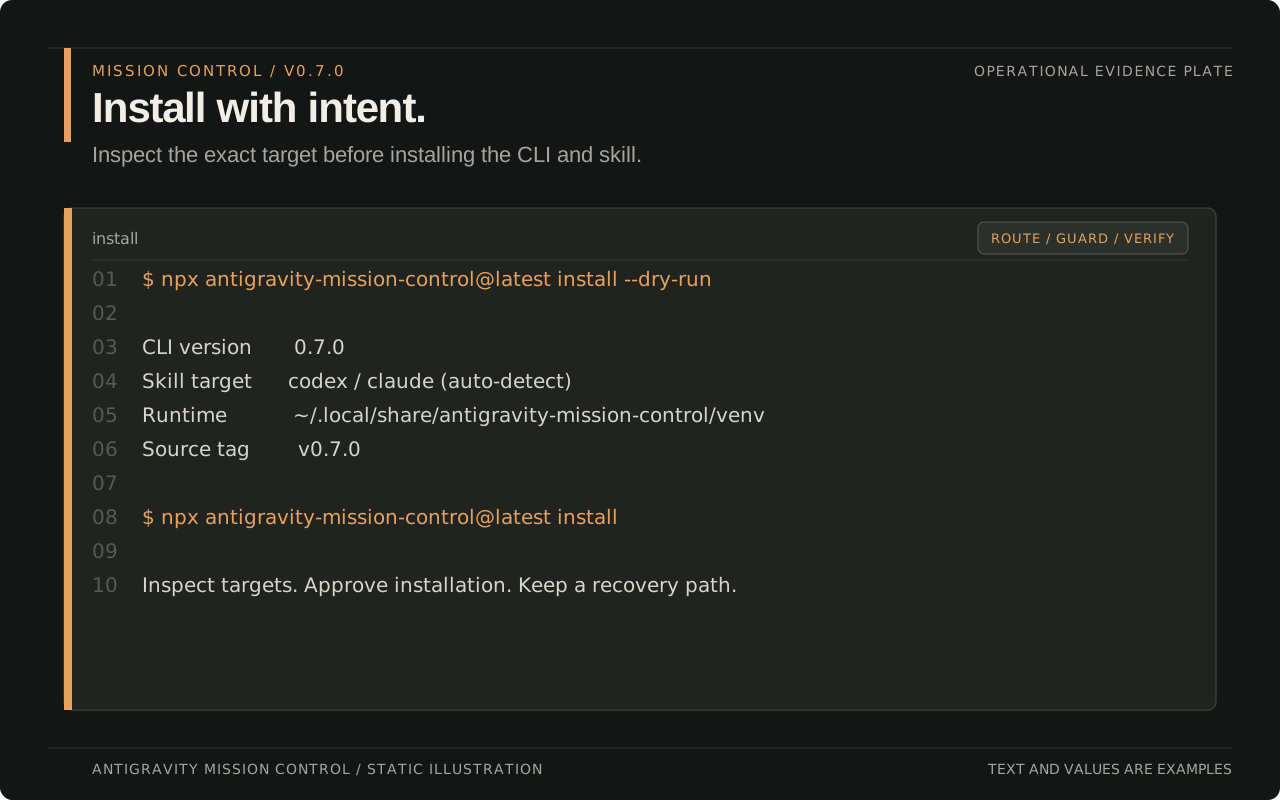 Guided install. Exact targets and dependencies are shown before anything changes. |
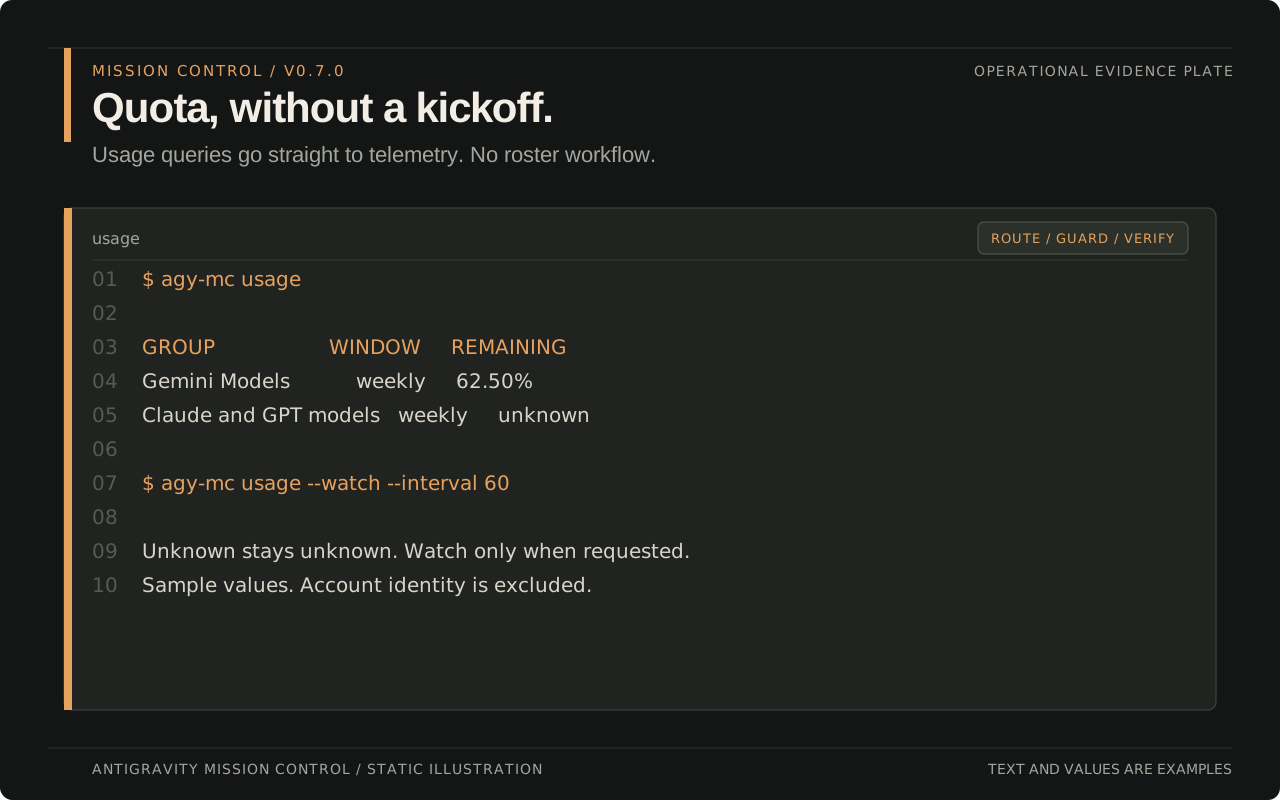 Live quota. Watch model groups, windows, remaining quota and reset state. |
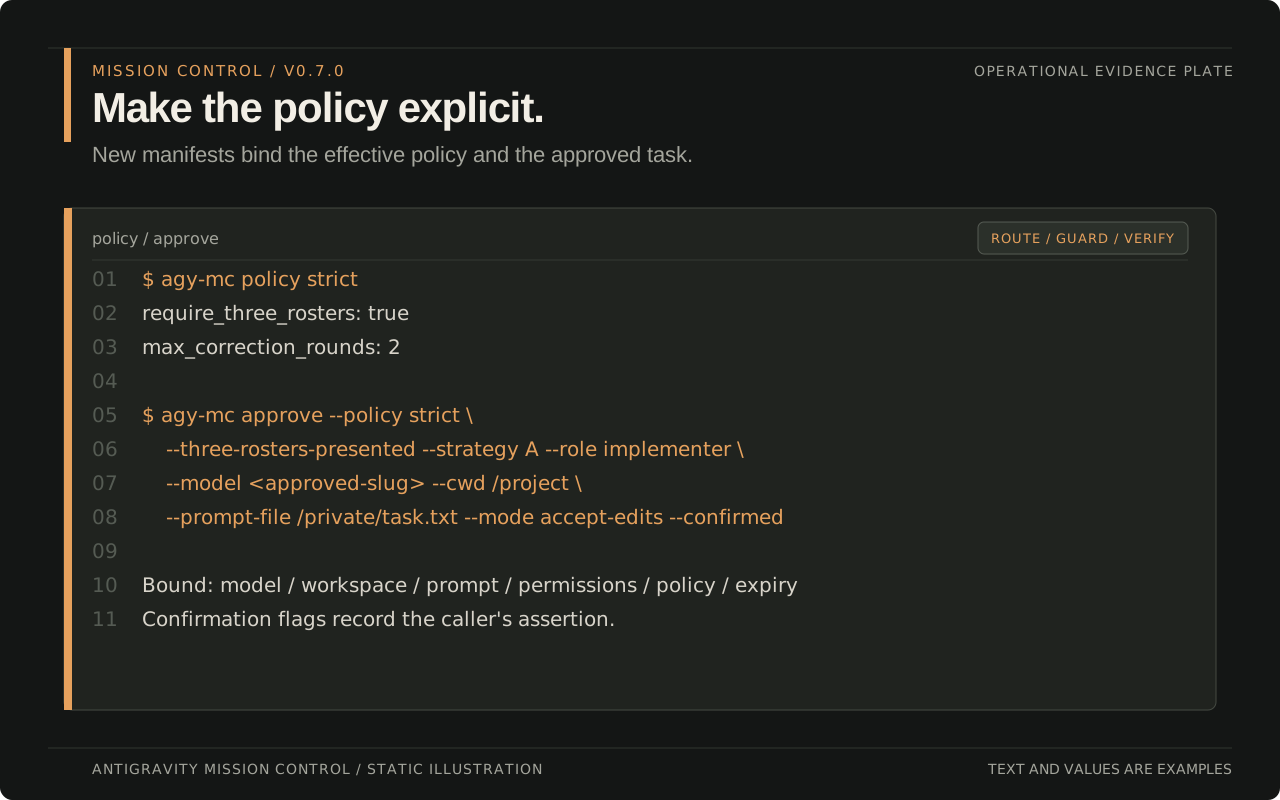 Bound approval. Model, role, workspace, prompt and expiry travel together. |
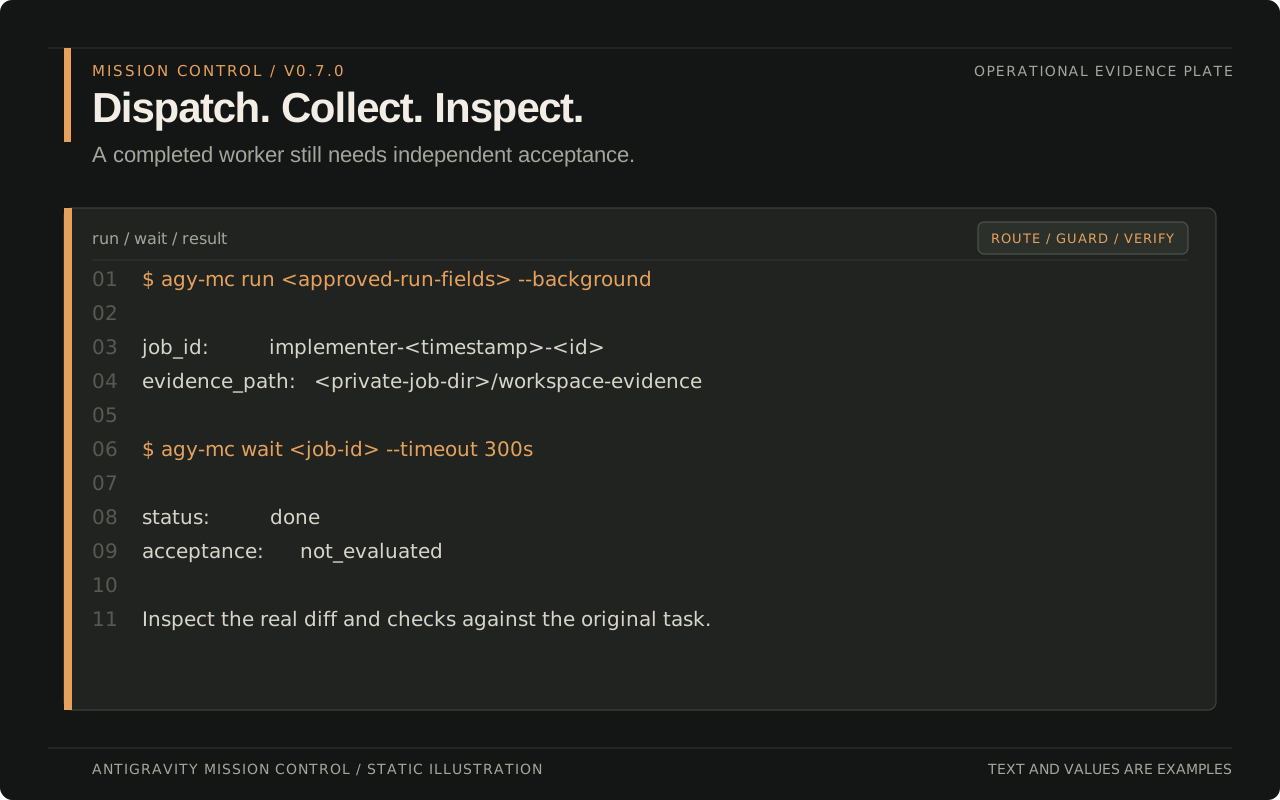 Background control. Dispatch, inspect and collect durable jobs without confusing worker output with acceptance. |
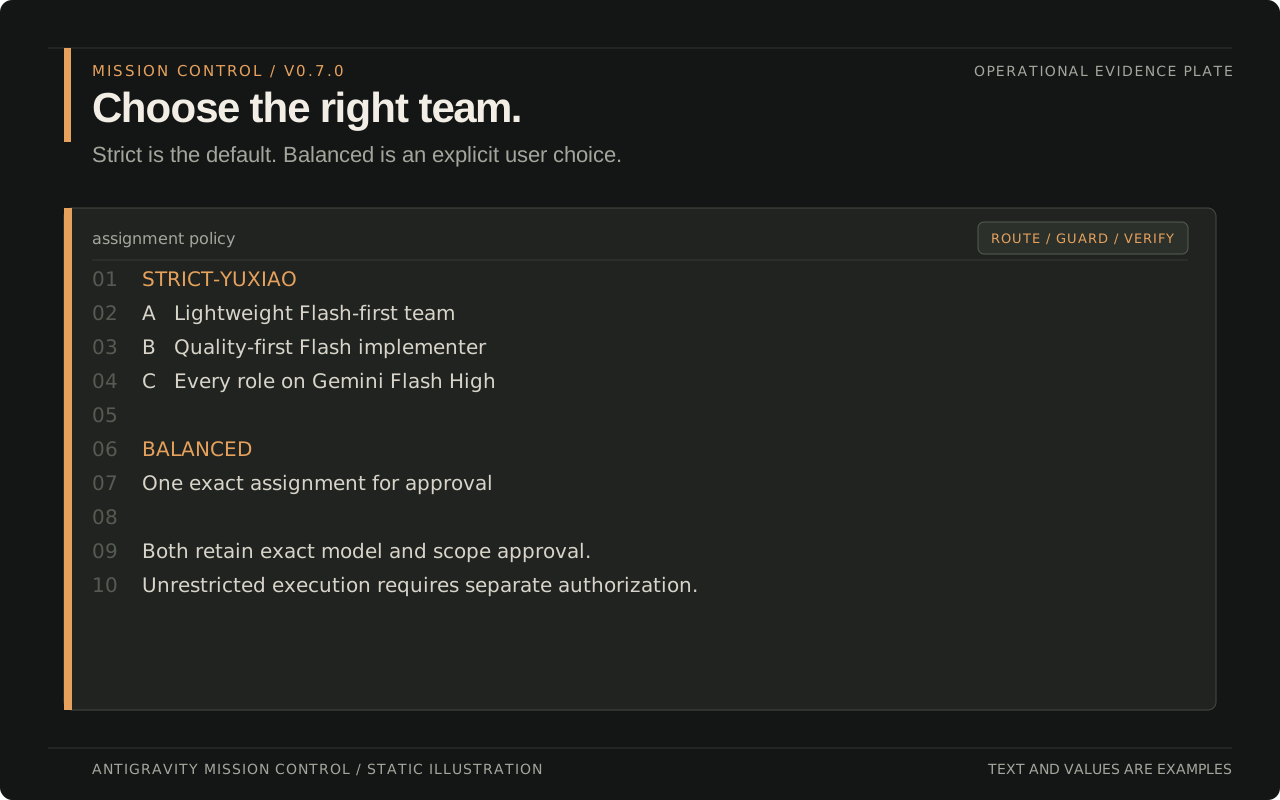 Roster selection. Compare complete roles, exact models and access before any worker starts. |
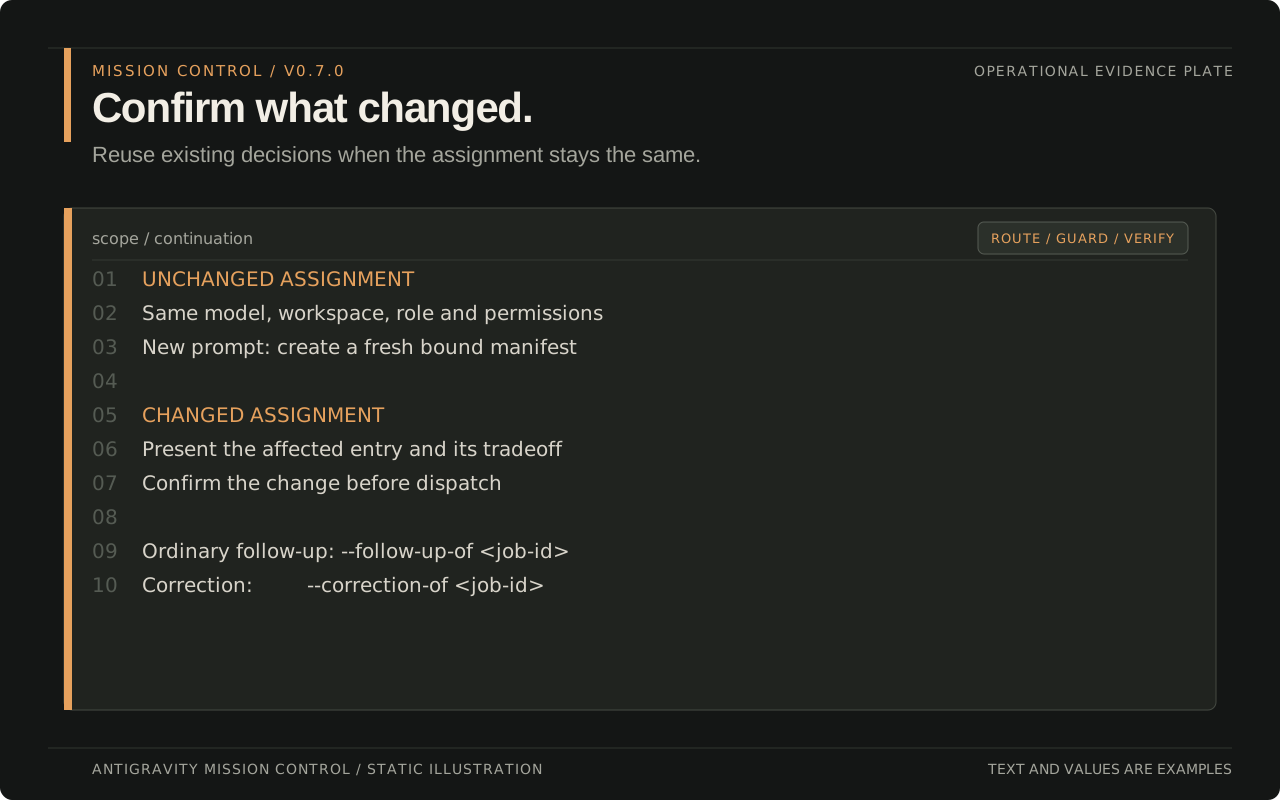 Change confirmation. See the approved value, proposal, reason and review impact before accepting a change. |
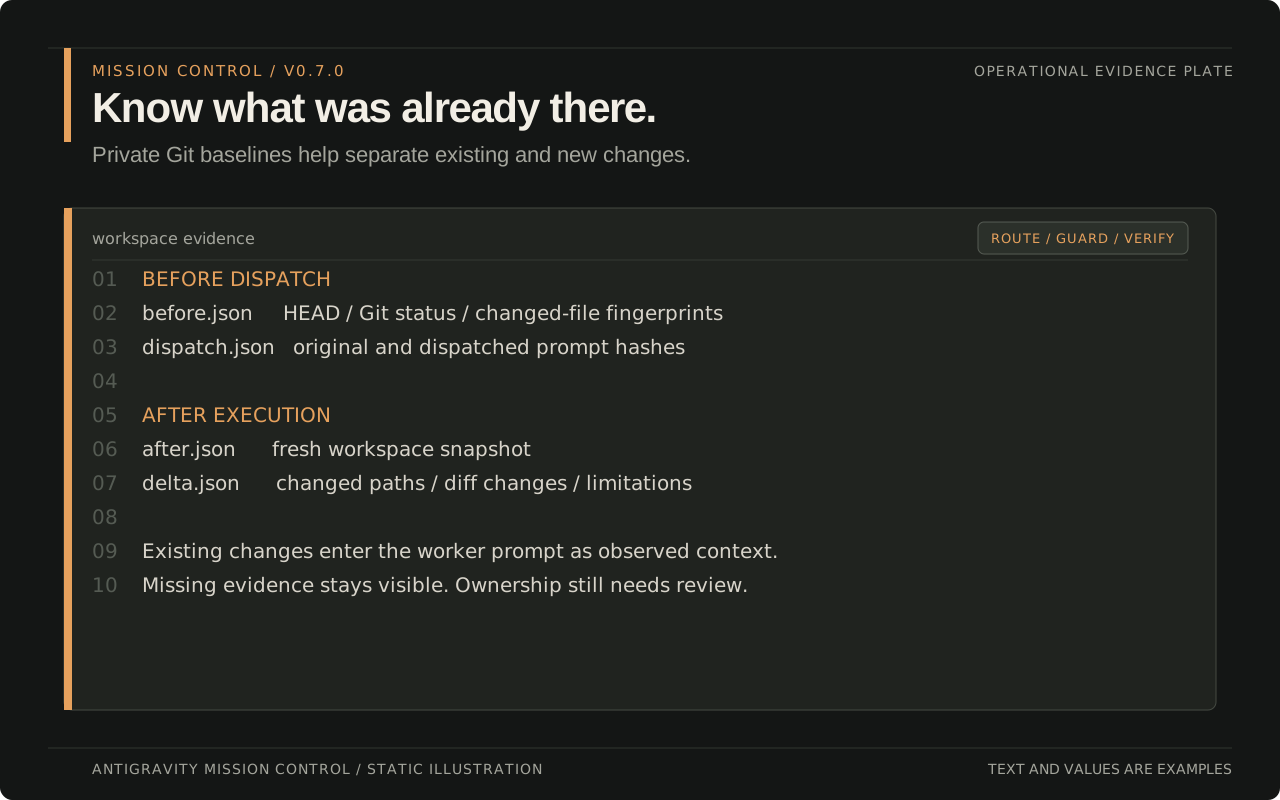 Workspace evidence. Git baselines, changed-file fingerprints and explicit limitations. |
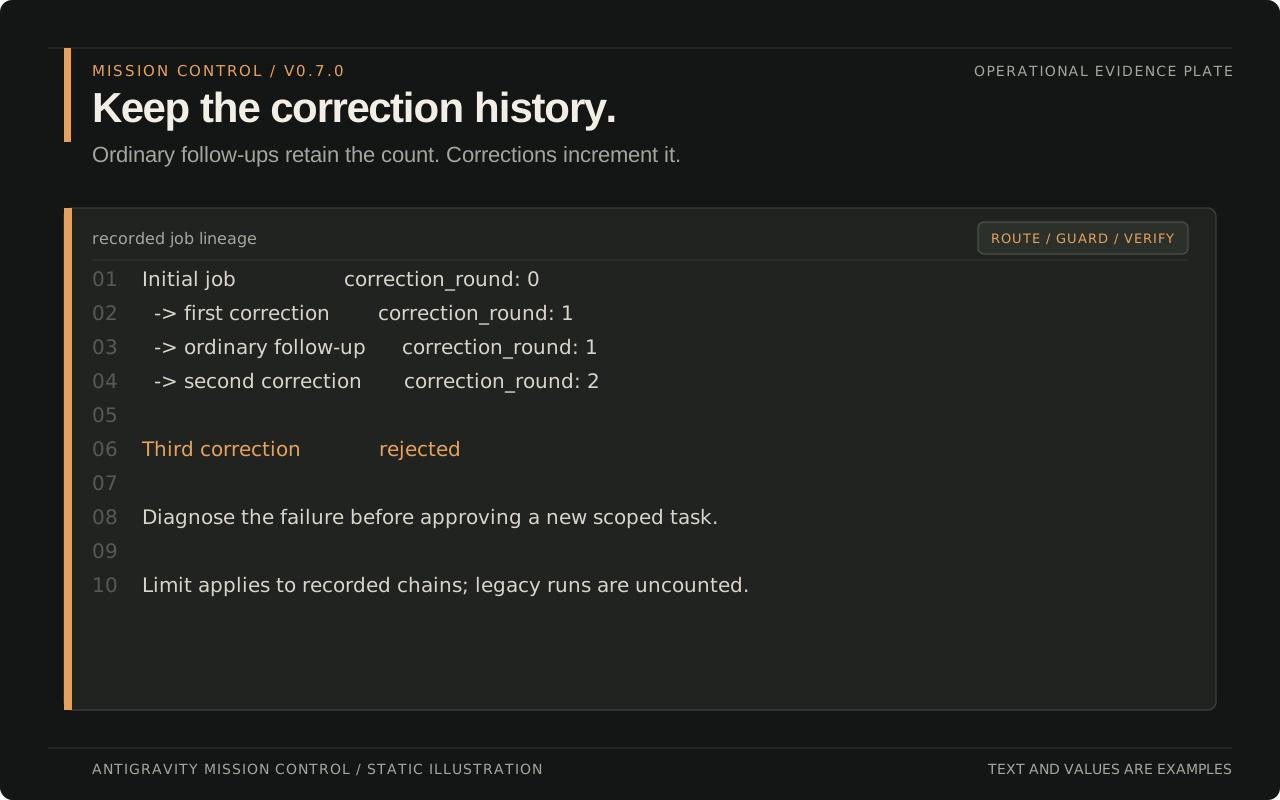 Correction history. Follow-ups retain the count; a third correction is rejected. |
Put the quota you already have to work
If your account includes a Google One AI plan or an eligible student offer, you may already have a year of Gemini access. That quota can sit idle while Antigravity's desktop client breaks your rhythm and its CLI never quite becomes home. Your coding agent has become muscle memory, but its allowance can vanish before lunch and a slow turn may take the scenic route. Gemini Flash brings the speed you wanted to use.
Install Mission Control in the harness you already know, Codex or Claude Code. Let it act as product manager, supervising editor, and suspicious acceptance reviewer. Give the implementation tickets to Antigravity. The host agent defines scope, approves authority, inspects diffs, and runs the checks; AGY workers do the typing.
Bring your own eligible Google account and quota. Mission Control neither creates a subscription nor increases provider limits.
The control loop keeps the work on course
| Stage | Who owns it | Guardrail |
|---|---|---|
| Structure | Host agent | Converts the request into scope, constraints, acceptance criteria, and bounded roles |
| Choices | Host agent + you | Offers A/B/C model rosters and meaningful design alternatives; you select or revise the consequential choices |
| Execution | AGY workers | Plans and implements inside the approved objective without asking for permission on every harmless step |
| Supervision | Reviewer + host agent | Checks drift, evidence, tests, and delivery quality; the host agent accepts, corrects, or rejects the result |
The planner can choose its own route inside the approved objective. It surfaces alternatives when a choice changes scope, cost, reversibility, or product behavior. The reviewer receives the original brief and the real artifacts, so it can catch a polished answer that solved the wrong problem.
What A, B and C mean
Mission Control discovers the current AGY model catalog before proposing a roster. Each proposal names the executor, exact model slug, role, filesystem scope and execution profile. You choose one before dispatch.
| Strategy | Team design | Best fit | Tradeoff |
|---|---|---|---|
| A: Lightweight Flash-first | Uses the smallest adequate team and prefers Gemini Flash at role-appropriate intensity. | Routine development, bounded changes and quota-aware work | Lower cost and latency, with fewer independent model passes |
| B: Quality-first Flash implementer | Keeps the strongest planning and review available, but sends implementation to Gemini Flash first. | Ambiguous design, large changes, security-sensitive work and costly mistakes | More quota and time in exchange for deeper planning and independent checking |
| C: Quality-first Gemini Flash High | Keeps B's quality objective while routing every AGY role to the newest exact gemini-.*flash-high slug. |
Quality-focused Gemini work with consistent, fast routing | Review diversity comes from separate conversations and host verification because all AGY calls share one model family |
These strategies are routing rules, not permanent model lists or benchmark rankings. Mission Control reads agy-mc models at run time and pins the exact slug you approve. A and B may propose Gemini Flash medium or low for lower-intensity work; actual approval still requires the separate non-High Gemini confirmation. C always uses High. A changed model, role, write scope or permission profile requires confirmation again.
The installed Skill uses the same field order shown in the roster selection and change-confirmation images above. A roster proposal ends with an explicit A/B/C choice. A modification pauses the affected entry and shows the approved value, proposed value, reason, scope impact and review-independence impact before asking again.
Install
Already have AGY? Verify it, launch it once to finish Google sign-in, then install Mission Control:
agy --version
agy
npx antigravity-mission-control@latest install
No AGY yet? The installer can fetch Google's official installer first:
npx antigravity-mission-control@latest install --install-agy
Interactive installation asks before adding AGY when it is missing. Non-interactive installation requires the explicit --install-agy flag. After a fresh AGY install, run agy to complete Google sign-in. Mission Control never reads or copies that login state.
The bootstrapper shows every target before writing, creates a private managed Python environment, installs agy-mc, deploys the Skill to Codex and/or Claude Code (auto-detected, or choose with --host), and runs without shell interpolation. For CI or agents, add --yes; inspect first with --dry-run.
npx antigravity-mission-control@latest install --dry-run
npx antigravity-mission-control@latest install --yes
npx antigravity-mission-control@latest status
Direct Python installation is also supported:
python3 -m pip install "git+https://github.com/YuxiaoMa66/[email protected]"
agy-mc skill install --host auto
agy-mc doctor
Full setup, upgrade, uninstall, local-source and PATH notes: Installation guide.
What Mission Control adds
| Layer | Responsibility |
|---|---|
| Host Skill (Codex / Claude Code) | Roster choice, scope, permission boundaries, independent acceptance |
agy-mc core |
Model discovery, signed approvals, AGY transport, jobs, locks, evidence, quota |
| npm bootstrap | Managed Python environment, Skill deployment, update and recoverable uninstall |
| AGY | Executes the exact bounded worker assignment |
The npm layer is deliberately thin. The Python companion is the single behavioral implementation, so npm and direct Python installs cannot drift into different orchestration rules.
Live quota
agy-mc usage
agy-mc usage --watch --interval 60
agy-mc usage --format json
The normalized agy-mc-usage.v1 output includes model groups, quota windows, remaining percentage, reset time and disabled state. Missing data stays unknown; it is never rewritten as 0%. Raw provider payloads, OAuth material and account identity are excluded.
Bound approvals
After the user approves the exact roster and permission profile, create a short-lived manifest:
agy-mc approve \
  --policy strict --three-rosters-presented \
  --strategy A --role implementer --model gemini-3.8-flash-medium \
  --cwd /absolute/project --prompt-file /private/prompt.txt \
  --mode accept-edits --expires-minutes 60 \
  --non-high-gemini-confirmed --confirmed
Pass the returned file to run. The machine-local HMAC binds strategy, role, model, canonical workspace, prompt hash, mode, permission profile, conversation and expiration. Changing any bound field invalidates the run.
agy-mc run \
  --strategy A --role implementer --model gemini-3.8-flash-medium \
  --cwd /absolute/project --prompt-file /private/prompt.txt \
  --mode accept-edits --approval-file ~/.local/state/antigravity-mission-control/approvals/<id>.json
Legacy boolean approval flags remain for migration from earlier releases and are deprecated.
Background jobs
Add --background, then use:
agy-mc status [job-id]
agy-mc status --limit 20 --state running --state canceling
agy-mc wait <job-id> --timeout 10m
agy-mc result <job-id>
agy-mc cancel <job-id>
agy-mc continue <job-id> --prompt-file /private/follow-up.txt
agy-mc prune --older-than 7d
agy-mc prune --older-than 7d --yes
Editing jobs use an OS-level non-blocking lock per canonical workspace. cancel records canceling, waits after TERM, escalates to KILL if required, and reports canceled only after process exit is confirmed.
Listing all jobs with no job-id supports --limit N (most recently started N jobs) and --state (repeatable, keep only these states).
prune --older-than DURATION (ms/s/m/h/d, e.g. 12h or 7d) deletes finished jobs (done, done_with_warnings, error, crashed, cancel_failed, canceled) whose finished_at is older than the cutoff. It keeps unfinished jobs, jobs with a live pid, and jobs with an unknown or missing status or finished_at. Without --yes it is a dry run that reports what it would remove.
Design principles
- Exact models are discovered from the current AGY session; no remembered slug is treated as truth.
- Workspace trust and unrestricted execution are separate user-approved mutations.
- Worker success is not task acceptance. the host agent checks the real diff, diagnostics and tests.
- Prompts travel over
stream-jsonstdin, never in process arguments. - State directories are
0700; prompts, manifests, locks and results are0600. - Installation and uninstall preserve recoverable backups.
See Reference, Security, Contributing, and Release process.
Validate
python3 -m unittest discover -s tests -v
npm test
npm pack --dry-run
python3 -m compileall -q antigravity_mission_control scripts tests
License
MIT. Role-contract patterns were adapted from keli-wen/agy-staff under its MIT license; see NOTICE.
Yorumlar (0)
Yorum birakmak icin giris yap.
Yorum birakSonuc bulunamadi